-
Three situations, and how to know which one you’re in
-
Scenario A: You need a small order—a sample, a trial, a one-off
-
Scenario B: You’re buying recurring volume or building a private label line
-
Scenario C: You’re writing a spec sheet or negotiating a contract
-
How to tell which scenario you’re actually in
I’ve been managing purchasing for a 130-person company since 2020. Officially, my job is “administrative services.” In practice, that means I buy everything from office chairs to the marine vinyl we had to replace on two customer-facing boats after a remodel went sideways.
When people ask me which synthetic leather to buy, they usually want a name and a price. I don’t have one. What I have is a rough sort: three situations, three different answers, and a bad habit of asking too many questions before I hand over a purchase order.
Here’s how I think about it.
Three situations, and how to know which one you’re in
Before you call a single supplier, sort your own order. I use three buckets:
- Situation A: One to five rolls. Under $1,500. Sample, trial, or a one-off job.
- Situation B: Recurring volume for a product line or a scheduled replacement cycle. I’m thinking in yards or meters per month.
- Situation C: A contract or a spec sheet that other people will use to verify claims. Compliance documentation matters as much as price here.
Half the bad purchasing experiences I’ve had came from walking into a supplier relationship in the wrong bucket. I showed up as a Situation A buyer, got treated like a Situation A buyer, and then got annoyed about it. That was on me.
Scenario A: You need a small order—a sample, a trial, a one-off
This is where I started. In early 2021 we needed enough Spradling marine vinyl to reupholster a single bench seat on one of our boats. Two rolls. Maybe 10 yards. That’s it.
The first three artificial leather manufacturers I emailed didn’t respond. One sent back a quote with a 500-yard minimum and a two-line reply. I didn’t blame them—small orders cost money to process. But here’s the thing: that’s a choice they made, not a law of the industry.
Small doesn’t mean unimportant. It means I’m testing something. I’m testing whether a supplier can send an invoice that finance won’t reject, ship on time, and answer a question without making me feel stupid. The vendors who did that for a $400 order are the ones I now send $18,000 orders to.
If you’re in Scenario A, here’s what I’d actually do:
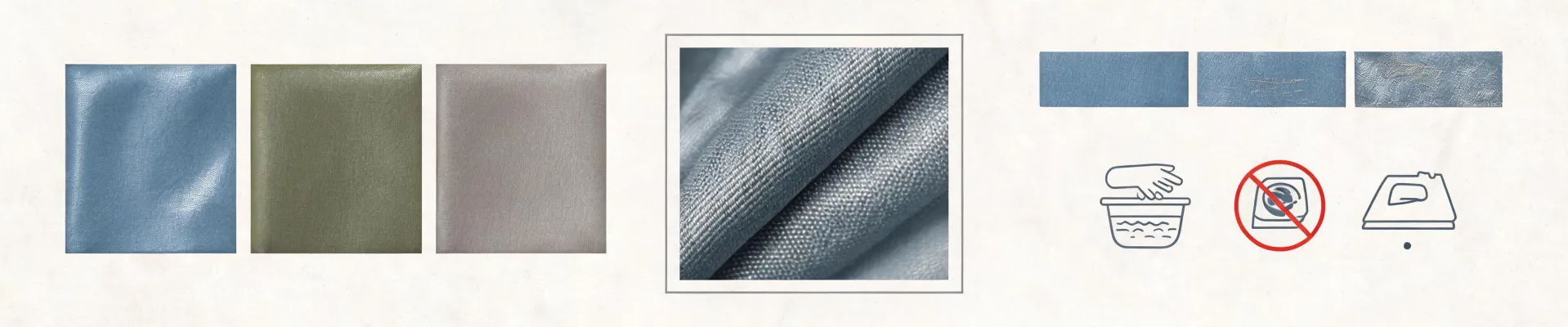
- Ask for a sample card, not a sample roll. Most mills will send swatch books for a modest fee, and that fee is worth paying. It lets you feel whether spradling softside marine vinyl matches what your customer expects, or whether you need something with a firmer backing.
- Say up front that it’s a trial. Vendors who hear “trial” and adjust their expectations are usually better partners than vendors who treat you like a waste of time.
- Don’t apologize for the size. I used to open every email with “I know this is a small order, but…” Then I realized I was setting the price before they did.
People think bigger orders get better service. If we’re being honest, the causation runs the other way. Vendors who give good service on small orders are the ones who earn the bigger orders later.
Scenario B: You’re buying recurring volume or building a private label line
Two years in, our events and displays side picked up. We needed a steady run of synthetic leather for branded display panels—about 300 to 600 yards a quarter, same color, same texture, with our own backing label. That put me into synthetic leather private label territory, and it was a different world.
This is where conversations get real. And where I learned that “price per yard” is nearly meaningless without context.
The decision that kept me up for two weeks: One supplier quoted about 14% less than the other. The other had a clearer spec sheet, a color-matching program, and a rep who answered emails in hours, not days. On paper, the cheaper option made sense. My gut said something was off.
I went with the more expensive one.
Four months later I found out the cheaper supplier had swapped resin sources mid-run and issued a variation notice—slightly different gloss level, same SKU. For our display panels, that would have been a full rework across six trade-show kits. Roughly $3,200 in labor and materials to fix what I’d have saved about $600 on. Net loss on the “smart” choice: around $2,600. Not counting the two weekends I spent tracking down replacement stock.
The lesson isn’t “always pay more.” It’s that the cheapest yard isn’t the cheapest project. If you’re buying spradling marine vinyl or any branded coating at volume, ask what happens when the roll number changes and the color is half a shade off. The answer tells you who you’re really dealing with.
Scenario C: You’re writing a spec sheet or negotiating a contract
This is the one where compliance matters as much as price, and where I’ve learned to slow down and read carefully. If you’re building a solvent free leather wholesale cost guide for your own team—or just trying to understand why “solvent-free” carries a premium—here’s what I’ve pulled from three rounds of RFQs since 2023:
- The premium isn’t the resin. It’s the coating line. Solvent-free production often runs slower, and not every mill has dedicated capacity for it. You’re paying for availability and scheduling, not just chemistry.
- Ask for the spec sheet, not the marketing tier. “Solvent-free” means different things depending on who’s saying it. Some producers mean zero solvent in the coating. Others mean low-solvent. Get the technical data sheet and read the definition.
- Be careful with broad environmental claims. Per the FTC Green Guides (16 CFR Part 260), environmental claims like “eco-friendly” or “sustainable” must be substantiated and specific. A supplier who can point to a documented measurement is more trustworthy than one who can’t.
I’m not a chemist. But I’ve learned to ask three questions before I put any supplier on a spec sheet: What is the exact formulation claim? What documentation backs it up? And who signed off on that documentation?
If a rep can’t answer all three, the material might still be fine—but I’m not signing my name to it.
How to tell which scenario you’re actually in
Most buyers are in two scenarios at once. I am. But the first question I ask is: is this a one-time buy, or the start of something recurring?
Three questions to sort yourself:
- Will I need this same color and spec again within 12 months? If yes, you’re in B—buy as if you’re building a relationship, not closing a transaction.
- Will someone downstream from me need to verify claims about this material? If yes, you’re in C—get every claim in writing with a source attached.
- Am I evaluating the supplier as much as the material? If yes, you’re in A—and that’s fine. Trials exist for a reason.
There’s no single right answer here. But there’s a wrong one, and it’s pretending all three situations are the same thing. I’ve done that. It cost more than it should have.
Start with your own order. Then go shopping.
Editorial boundary
This article is an independent interpretation aid. Verify the exact collection, color, regional document, method and current commercial status with Spradling or an identified official channel. No affiliation, authorization, inventory or project approval is implied.

Beatriz Costa
Beatriz Costa is an outdoor and performance-fabric analyst specializing in waterproof shells, breathable laminates, ripstop, nylon and polyester oxford, tent cloth, backpack fabrics, awnings, and solution-dyed textiles. She uses ISO 811 hydrostatic-pressure and ISO 13937-2 tear methods while tracking water resistance, tear force, moisture-vapour transmission, air permeability, coating adhesion, UV colourfastness, abrasion, and low-temperature flexibility. Her technical comparisons help outdoor brands, converters, and equipment manufacturers balance protection, breathability, durability, packability, seam construction, and climate exposure.