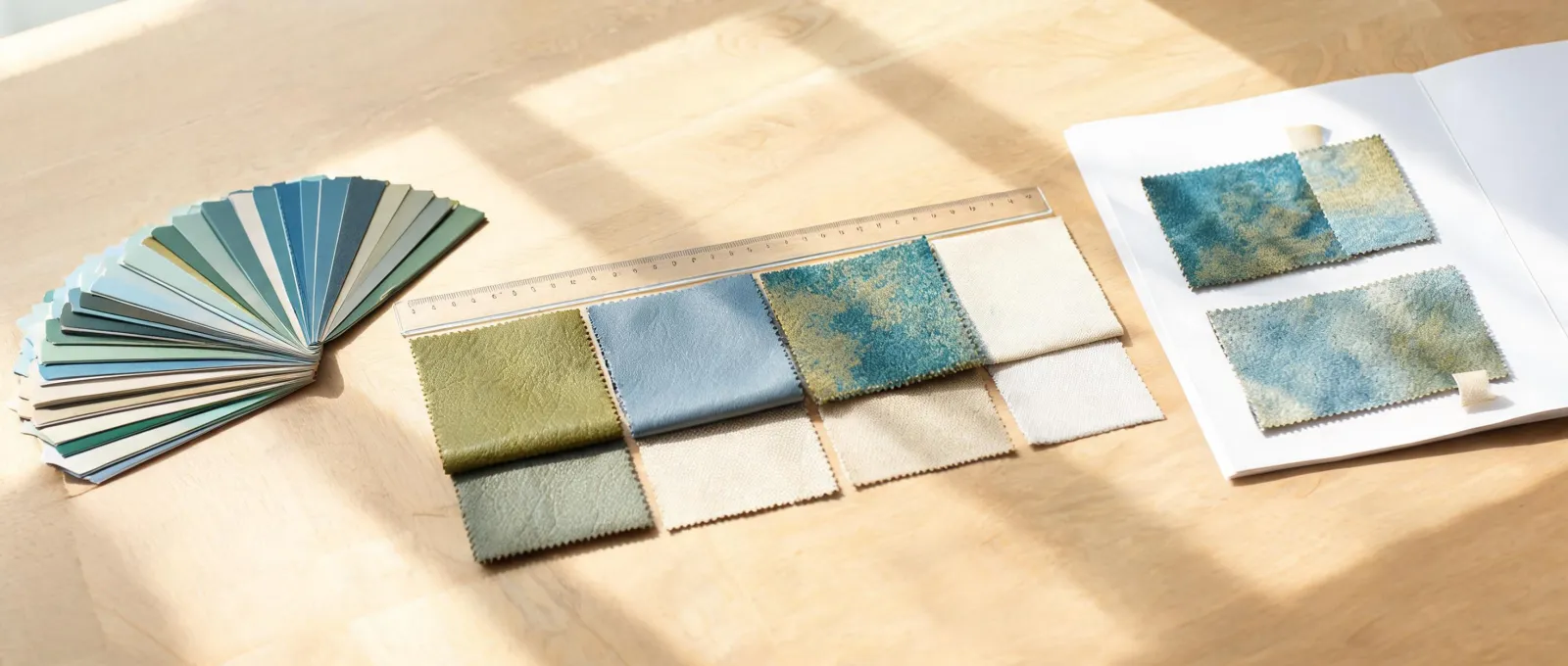
Independent coated-surface selection referencePrepare a material brief

Five questions before a collection shortlist

This matrix organizes inquiry fields; it does not claim that every Spradling collection meets each option.

Decision fieldRecord before comparisonEvidence to requestCommon limitation
ApplicationContract, marine, transportation or residential; indoor/outdoor; substrate and seamOfficial intended-use statement for exact collectionMarket examples do not equal project approval
ConstructionSurface polymer/topcoat, backing, weight and usable widthCurrent technical data sheet and regional referenceSimilar grain does not prove identical chemistry
WearContact frequency, abrasion, flexing and edge conditionsWyzenbeek or Martindale method, cycles, endpoint and specimenCycle counts from different methods are not directly interchangeable
CareSoil type, cleaner, dilution, rinse and disinfection frequencyCurrent care guide and prohibited-method listCompatibility can depend on concentration and dwell time
ExposureUV, heat, moisture, salt and indoor-air constraintsNamed test, duration, result and warranty conditionsA lab exposure cannot guarantee field lifetime

Material trade-offs worth stating explicitly

Layered coated construction

Useful when: a project values a cleanable, designed surface with specified backing and finish options.

Review carefully: coating adhesion, seam behavior, cleaners, heat and flexing. Layered construction may complicate separation at end of life, so a recycled or bio-attributed input does not prove circularity of the finished material.

Textile-like hand and visual

Useful when: designers want visual softness or grain without specifying finished natural leather.

Review carefully: appearance cannot identify composition, breathability, durability or environmental profile. The exact collection document, not the look alone, defines the evidence.

High abrasion result

Useful when: the method and endpoint match a relevant screening requirement.

Review carefully: Wyzenbeek and Martindale differ, and laboratory cycles do not capture every seam, substrate, cleaner, edge or misuse condition. Finished-assembly validation remains separate.

Environmental attribute

Useful when: issuer, scope, percentage, chain of custody and reference are current and explicit.

Review carefully: recycled backing, bio-attributed polymer, indoor-air evidence and management-system certification answer different questions and cannot be collapsed into “sustainable.”

Selection questions buyers often miss

Only after confirming the same method, abradant, endpoint and specimen. A Wyzenbeek result and a Martindale result are not a single universal scale, and neither independently predicts field service life.

No. Keep the named material method and result, then verify the project’s finished-assembly, jurisdiction and substrate requirements. Do not translate a pass result into “fireproof.”

No. Use an official Spradling or identified authorized channel for current color status, sample policy, inventory, minimums, price and lead time. This site only prepares the question.

Record collection, color, document version, specimen construction, conditioning, method, equipment or laboratory, endpoint and result. Compare the published evidence with a project-specific sample or assembly test arranged through the appropriate official parties.

Turn the shortlist into an exact request

Provide collection, color, end use, substrate, indoor/outdoor exposure, cleaning chemistry, relevant method, quantity and target date. The response will identify verification gaps, not certify the product.