-
When this checklist applies
-
Step 1: Match the substrate to the end-use, not the sales pitch
-
Step 2: Read the backing spec before the face spec
-
Step 3: Verify test reports — not claims
-
Step 4: Get physical samples and test them in your own shop
-
Step 5: Do the TCO math before the unit-price comparison
-
Step 6: Lock the private-label / OEM terms in writing before the first sample
-
Step 7: Freeze the spec sheet into the PO
-
Notes and mistakes I still see
When this checklist applies
If you're a buyer placing your first or fifth wholesale order for artificial leather — marine vinyl, upholstery vinyl, suede-backed fabric, automotive trim — this list is for you. I'm a procurement manager at a mid-size upholstery and marine-interior contractor. Our fabric spend runs about $180,000 a year, spread across eight to ten suppliers depending on the season. I've been running this exact sequence since 2022, when a $4,200 order of "marine-grade" vinyl turned out to be a standard upholstery backing with a UV additive sprayed on top.
Seven steps. None of them are exotic. The order matters more than the individual items.
Step 1: Match the substrate to the end-use, not the sales pitch
Marine, upholstery, and automotive are three different performance envelopes. Marine vinyl needs UV stability, cold-crack resistance, mildew resistance, and salt-air tolerance. Upholstery needs abrasion resistance (Wyzenbeek or Martindale) and cleanability. Automotive has its own OEM spec, and honestly, if you're sourcing for OEM auto you already know the spec sheet is 40 pages and none of this applies — you go by the program requirements.
The mistake I see most: buyers accept a supplier's "all-purpose" or "universal" grade because it's cheaper. There is basically no such thing. A fabric that passes marine tests is overengineered for a low-traffic office chair. A fabric priced for office chairs will fail marine testing in 18 months. Every supplier rep I've talked to in 2024 and 2025 — including the ones at Spradling's booth at the trade shows — says the same thing: the spec drives the price, not the other way around.
Checkpoint: Before you request quotes, write down your end-use environment in one sentence ("covered cockpit seating, salt air, sun exposure 8 hours a day"). Send it to every vendor with your RFQ. If a vendor can't map their product to that sentence, that's a red flag.
Step 2: Read the backing spec before the face spec
The face is what the customer sees. The backing is what determines whether it survives your sewing floor. A knit backing gives you stretch and drape. A non-woven gives you dimensional stability but less elongation. A woven backing gives you better tear strength and worse flexibility.
When we evaluated Spradling Softside marine vinyl in Q3 2024, the soft-touch face was the obvious selling point (it's a big improvement over the plasticky feel of older vinyls, not going to lie). But the reason it landed in our standard spec was the backing construction — it handled our 3/8" seams without puckering, and it didn't telegraph the foam underneath after a season of heat cycling. That's not something the marketing sheet tells you. That's what happens when you get a physical sample in the shop.
Checkpoint: Request the technical data sheet (TDS), not the marketing one-pager. It should list backing type, total weight (oz/yd² or g/m²), thickness, and elongation percentages. If the TDS doesn't specify backing construction, ask. If they can't answer, move on.
Step 3: Verify test reports — not claims
Common standards for artificial leather in wholesale channels:
- MVSS 302 (FMVSS 302) — automotive flammability
- California TB 117-2013 — upholstered furniture flammability
- IMO FTP Code Part 7 and Part 8 — marine
- ASTM D4157 (Wyzenbeek) or ASTM D4966 (Martindale) — abrasion
- ASTM G154 or G155 — accelerated UV weathering
- ASTM D6413 — vertical flame
Ask for the actual test report PDF, not a bulleted marketing page. The report should have the lab name, sample date, product code, and results — not just a checkmark. I've had two vendors in the last three years send me reports that were 5 years old and for a discontinued product code. Both times we caught it because we asked for the date and lot number.
Checkpoint: Cross-reference the product code on the test report with the product code you're being quoted. If they don't match, request a new report. If they push back, that's a deal-breaker for us.
Step 4: Get physical samples and test them in your own shop
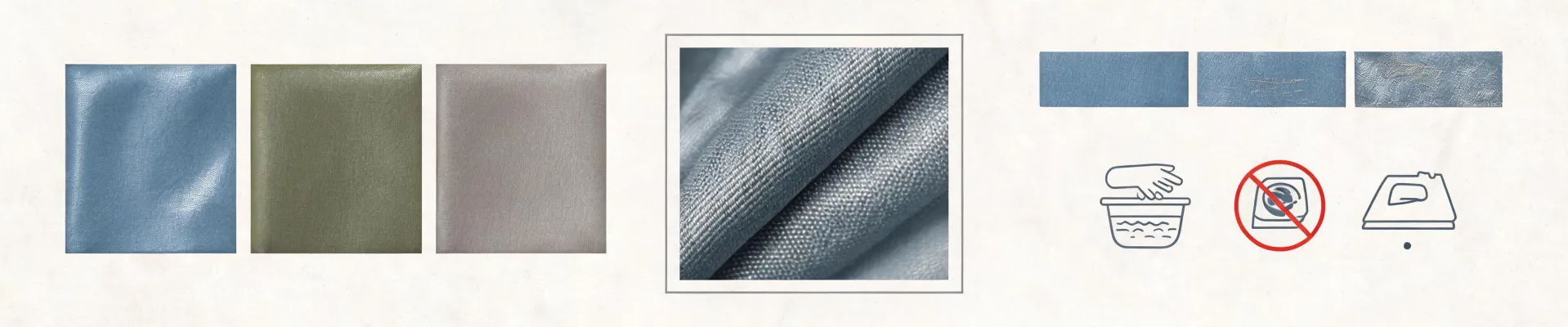
Digital color cards lie. Screens render differently, and vinyl color shifts under different light temperatures. Beyond color, you need to test:
- How it sews on your machine and with your needle/thread combo
- How it handles your staple or adhesive system
- How it holds up to your cleaning chemicals (isopropyl, quat-based, and whatever marine-grade cleaner you actually use)
- How it heat-cycles in your environment — a simple oven test at 180°F for 48 hours will tell you more than any datasheet
In my first year doing this, I made the classic rookie error: approved a "Spradling marine vinyl" sample based on the swatch book, ordered 40 yards, and found out the production lot had a slightly different texture finish than the book. Cost me a $600 redo for a customer who noticed the difference on a two-seat bench. Since then, every sample gets a production-lot comparison before I sign a PO.
Checkpoint: When you receive the production lot, cut a 6" x 6" square and compare it side-by-side with your approved sample under daylight and under your shop lights. Do this before you cut into the roll.
Step 5: Do the TCO math before the unit-price comparison
Unit price is the single most misleading number in wholesale fabric. The real comparison:
| Cost line | What to ask |
|---|---|
| MOQ | Minimum order — can you hit it, or are you buying dead stock? |
| Freight | Roll shipments cost more than folded. Who pays? |
| Waste rate | How much per roll is unusable on your cutting table? Wider rolls = less waste. |
| Lead time | What's the reorder window? If you need to expedite, what's the premium? |
| Return policy | Do they take back a bad lot, or do you eat it? |
Bottom line: I've seen a "$1.20/yd cheaper" fabric cost us 14% more per job after waste and one reorder premium. The math isn't hard, but you have to actually do it.
Checkpoint: Build a one-page TCO sheet. Our rule is: if the cheaper option isn't at least 8% cheaper after all loaded costs, we stay with the incumbent supplier.
Step 6: Lock the private-label / OEM terms in writing before the first sample
This is the step people skip, and it's the most expensive one to get wrong. If you're going the suede fabric private label or OEM route, get these questions answered in writing, on the quote, before anything is produced:
- Who owns the embossing roller or the print tooling?
- Is there a minimum run quantity for private label, and does it change if you skip a season?
- Can the supplier sell your pattern to a competing buyer? (Some will, if the contract doesn't say otherwise.)
- Who is responsible for color matching between lots, and what's the acceptable Delta-E?
- What's the lead time for a reorder, and is your pattern guaranteed to stay on file?
I worked with a leather fabric supplier in 2023 who promised a custom emboss on a 300-yard run, then discontinued the pattern after 200 yards because "it didn't move as fast as expected." Our contract didn't say it couldn't. That was a $3,100 lesson.
Checkpoint: If the private-label terms aren't in the quote document itself, they don't exist. Get them on paper.
Step 7: Freeze the spec sheet into the PO
Every purchase order should reference a frozen spec sheet that includes:
- Product code and lot number
- Backing construction
- Face composition (PVC, PU, blend)
- Weight and thickness, with tolerance
- Flame spec and report number
- Color reference number and Delta-E tolerance
- Roll width, length, and packaging
If the spec sheet isn't attached or referenced, you've got a handshake, not a contract. When the dispute comes — and it will, eventually — the PO is what your lawyer reads, not the email chain.
Notes and mistakes I still see
A few things that don't fit neatly into the steps above but matter:
- "Same standard" doesn't mean the same result. Two suppliers can both say "passes MVSS 302" and still deliver very different feel, drape, and durability. The standard is a floor, not a ceiling.
- Color shifts between lots are normal. Silent shifts are not. A 1.0 Delta-E drift is expected. A 3.0 Delta-E drift with no notice is a supplier problem you need to formalize in the spec.
- Expedite fees are where margin disappears. Ask for the expedite premium in writing at the time of the original quote, not when you're in a rush.
- Ask what happens when the lot fails. Some suppliers offer credit. Some offer replacement. Some offer nothing. Know before you buy.
One boundary I'll put on this: I'm not a polymer chemist, so I can't speak to formulation differences between PVC and PU at the molecular level. What I can tell you from a procurement seat is that the backing spec and the test reports will tell you more than any formulation claim on a marketing page. For the chemistry side, get your technical contact or an independent lab involved.
And one context note: this list reflects how we buy — mid-size volume, predictable quarterly orders, mostly marine and upholstery jobs. If you're a seasonal business with spiky demand, the MOQ and lead-time math in Step 5 shifts hard, and you probably want a larger safety stock buffer than we carry. If you're buying for automotive OEM programs, this list is a starting point at best — program-specific requirements override almost everything here.
Editorial boundary
This article is an independent interpretation aid. Verify the exact collection, color, regional document, method and current commercial status with Spradling or an identified official channel. No affiliation, authorization, inventory or project approval is implied.

Anouk de Vries
Anouk de Vries is a synthetic-leather and coated-fabric analyst specializing in PU, PVC, silicone, microfiber and suede surfaces, automotive trim, upholstery leather alternatives, foam laminates, and TPU-bonded fabrics. She uses ISO 2411:2024 coating-adhesion and ISO 7854 flexing methods while comparing coating weight, total thickness, peel strength, flex cycles, abrasion, hydrolysis resistance, cold cracking, surface gloss, backing stability, and VOC evidence. Her application guides help trim designers, furniture producers, converters, and buyers select constructions that balance grain, handfeel, durability, cleaning chemistry, forming behavior, and compliance documentation.