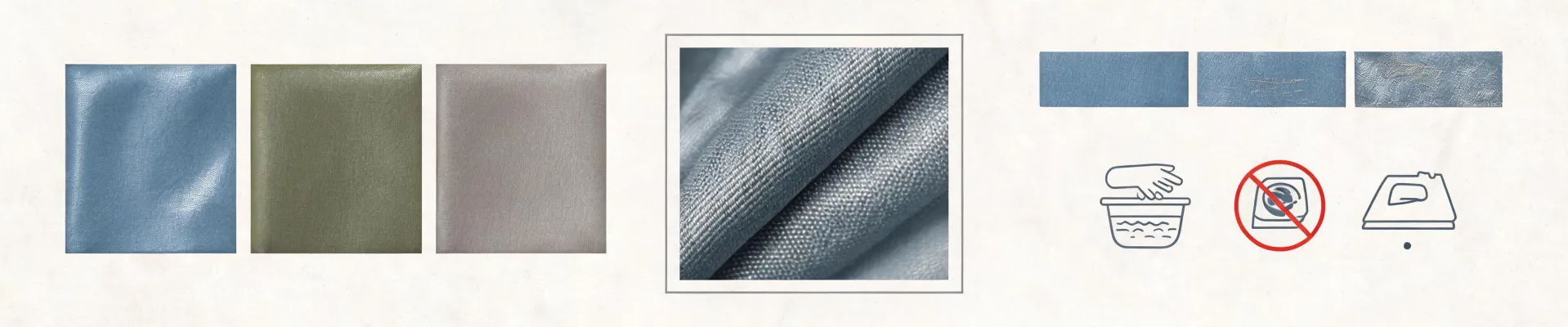
After six years of managing a multiple-six-figure fabric procurement budget for a marine upholstery manufacturer, I've settled on a blunt conclusion: the cheapest quote per yard is usually the most expensive decision you'll make. Across 14 supplier comparisons and more than 200 tracked orders, I've watched small price savings turn into rework, missed deadlines, and frustrated customers. If you're sourcing marine vinyl, automotive leather, or any wholesale synthetic fabric, here is how I now evaluate cost beyond the price tag.
A $320 "saving" that cost us $1,260
I started this job like most buyers: compare quotes, pick the lower number, and feel good for one afternoon. My first big lesson came with a low-cost artificial leather for indoor restaurant seating. The quote was $8.40 per square yard. A Spradling distributor had quoted $9.20 for their marine-grade vinyl, or about 9% more. I told myself we didn't need a marine vinyl indoors and placed the order.
I should mention that I hadn't asked for a spec sheet. That was the root of the problem.
Three weeks later, our cutting line was fighting the material. One roll had a wrinkled liner that confused the pattern cutter. Another roll contained a splice that we had to scrap entirely. Then, after the seats were installed, a seam split in one booth. Within 90 days, 14 of 50 seats were flagged for replacement. We spent $860 on extra labor, $140 on rush freight for replacement fabric, and lost an afternoon of production. The initial $320 budget saving turned into a $1,260 overrun. Put another way: we paid a premium to build the same job twice. My proud little spreadsheet was wrong because it only measured the unit price.
When I compared the failed material next to the marine vinyl sample, the difference in construction was obvious. The backer scrim was denser, the coating was more even, and the finish layer had a tighter bond. That's the kind of thing you can't see from a photograph, but you can absolutely see in a cross-section and in field failure rates.
How to choose leather fabric for wholesale: my checklist
After that experience, I built a simple sourcing checklist. It has saved us more than any low-price negotiation ever did.
- Start with the end use. Marine and RV interiors face UV, moisture, and thermal cycling. Automotive interiors face abrasion, fogging, and OEM test requirements. A good wholesale supplier should be able to direct you to a product line that fits those conditions. Spradling, for example, offers different vinyl lines for marine, upholstery, automotive, and RV applications. Each line has its own detailed specification guide, which is exactly what a B2B buyer needs to make a safe call.
- Demand written specs. If a manufacturer says 'good quality' without any numbers, I walk away. The spec sheet should include the base fabric construction, coating type (PVC or PU), coating weight, thickness, cold crack, abrasion results, fire retardant ratings, cleaning code, and warranty terms. Those numbers matter more than the color book.
- Run a mini pilot. We order a 10-yard cut before committing to a full roll order. We run it through a cutting table, sew it into an actual seat panel, and, for marine work, leave a sample in a wet environment for 72 hours. The pilot costs about 1% of the full order and has caught problems that would have cost 30 times that amount in rework.
- Calculate the total cost, not the unit cost. My formula includes unit price, freight, minimum order amortization, cutting waste, rework labor, downtime, and customer claim risk. On paper, an $8.40 fabric that creates 11% scrap costs more than the $9.20 fabric that cuts clean, even before you add a $1,260 failure bill.
- Check the supplier's support for OEM or private label. If private label is part of your strategy, you need a supplier with stable quality control, documented batches, and a technical contact who answers questions. Spradling vinyl has that kind of OEM support; a broker in the middle usually doesn't.
This approach is especially important if you're looking for a PU leather manufacturer or an automotive leather supplier. Those product categories sound simple, but the end-use spec difference between automotive, marine, and furniture is enormous. A fabric that looks identical in both categories may perform completely differently in the first summer of use.
The one time I pay extra without regret: time pressure
There is one situation where I now spend more without a second argument. It's when the cost of missing a deadline exceeds the extra fee.
Last year, a boat project slipped, and the customer needed 900 yards of Spradling marine vinyl within five business days. Our distributor could hit that deadline, but added a 25% rush fee. Another supplier quoted 18% lower and promised the color would be close enough, but he couldn't guarantee delivery until day ten. I went back and forth for an afternoon. The discount would have saved roughly $700, but the contract penalty for missing the launch date was $7,500. We would also lose an $18,000 repeat order. I paid the rush fee.
The fabric arrived in four days. The job went out on time. The client rebooked a bigger project for the following season.
That is why I stopped treating rush fees as pure waste. In an emergency, you aren't paying for speed alone. You're paying for a promise. A cheap supplier might come through, but a very cheap one cannot guarantee the delivery date, the color match, or the roll quality. In a deadline situation, that uncertainty is the real cost.
Honest caveats
Now for the side people don't post on social media. Not every project needs a marine-grade or premium automotive spec. Temporary event displays, low-cost decorative pillows, or short product runs might be perfectly fine with a budget-friendly PU leather or a lighter-weight vinyl. If the cost of failure is low, you have room to take a price chance.
I should also say that even the best brands release a bad roll once in a while. We keep a cutting sample from every batch and ask for a production test certificate. The final safety net isn't the brand sticker; it's our own receiving inspection.
So when someone asks me how to choose leather fabric for wholesale, I don't ask about the color trend first. I ask about the failure cost, the spec sheet, and the true price of my own schedule. That habit has saved me more money than any discount ever did.
Editorial boundary
This article is an independent interpretation aid. Verify the exact collection, color, regional document, method and current commercial status with Spradling or an identified official channel. No affiliation, authorization, inventory or project approval is implied.

Lucia Bianchi
Lucia Bianchi is a woven apparel-fabric analyst covering cotton, linen, wool, rayon, denim, shirting, twill, satin, poplin, and blended garment fabrics. She applies the ISO 1833 series for fibre composition and ISO 105-C06 for laundering colourfastness while checking GSM, yarn count, usable width, shrinkage, skew, shade grade, drape, and surface defects. Her specification guides help designers, sourcing teams, and mills align fibre claims, lab dips, bulk tolerances, care conditions, and garment performance before production approval.