The call at 3:40 p.m.
It was a Tuesday in late April, and I was doing that end-of-day thing where you answer emails and half-watch a calendar reminder. My phone buzzed. The caller ID belonged to a sourcing manager at a Gulf Coast boat builder, a production facility that builds express cruisers. He never called with good news.
“I need 60 yards of marine-grade synthetic leather,” he said, skipping hello. “And I need it here by Friday.”
I’m an inside sales specialist at Spradling, so I’ve heard worse last-minute requests. This one was still tight. The normal conversation would start with color, backing, and delivery dock. That Tuesday, it started with a roll label that said “premium microfiber leather” and a purchase order that said “OEM, per our marine spec.” Those two phrases did not mean what the buyer thought they meant.
What the label didn’t say
The material had sat in their trim shop for two days before anyone noticed a problem. When the upholstery crew cut the first seat cover, the face layer lifted from the backing in one corner. One cushion was enough to tell them it wasn’t an isolated bad section. The whole roll felt risky.
The supplier pointed to the words “premium microfiber leather.” That was supposed to answer every question. It didn’t.
Microfiber leather is a legitimate material family. I’m not one of those vinyl salespeople who tells you it’s always the wrong answer. Some microfiber leather is genuinely impressive. But the name is not a performance specification. It describes a construction family more than an end-use promise. It doesn’t tell you whether the product is UV-stable, resistant to hydrolysis, or built to stay flexible in a marine environment.
The OEM / private label mix-up
Here’s where the language broke down. When the boat builder sent the purchase order, they assumed “OEM” meant the manufacturer would build to their marine spec. That’s what OEM ought to mean: a product engineered for your requirements. But a supplier can use the same term loosely. In this case, the roll carried the buyer’s part number and a private label, while the material underneath was essentially the supplier’s stock product.
Private label isn’t bad. Leather fabric private label is a normal, practical way to bring a branded textile product to market without developing a new fabric from scratch. The problem is when private label gets sold as OEM, or when a buyer hears the word “OEM” and assumes the factory was working from their spec when it wasn’t.
The practical difference is simpler than it sounds:
- OEM: the material starts with your requirements. Performance criteria, backing, color, thickness, part number. Ideally the product doesn’t exist until you define it.
- Private label: the material already exists. You add your label, and often your packaging. The manufacturer’s standard spec is what you get, even if the label carries your logo.
If you’re buying synthetic leather wholesale, that difference decides everything. Price per yard is easy to compare from one supplier to the next. What isn’t easy to compare is whether the roll was engineered for your application or just labeled as if it was.
Microfiber leather: a category, not a guarantee
Microfiber leather can handle harsh duty if it’s engineered for that service. That is an OEM conversation. If someone asks for “OEM microfiber leather” and also wants it private-labeled by next week, one of those things has to give. True custom-engineered material usually needs lead time. A private label on a stock grade gives you speed, but you inherit the stock grade’s intended environment.
If you’re sourcing microfiber leather for automotive, marine, or anything with significant UV or moisture exposure, ask the manufacturer what the product was tested for. If the answer is just “it’s premium,” keep digging.
How we found the Spradling marine vinyl replacement
Here’s where I have to admit a limit. I’m not a polymer chemist. I can’t tell you exactly why that supplier’s topcoat lifted from its backing, and I won’t pretend to know without seeing lab reports. What I can tell you, from a procurement perspective, is what we did next.
We didn’t try to create a custom OEM order in 48 hours. That would have meant new material development, testing, and lead times that don’t fit in a production week. That wasn’t what the boat builder needed. They needed a marine-grade product, in stock, from a source that could document what it was.
We looked at the Spradling marine vinyl options already moving through the wholesale channel. Not every Spradling vinyl product is my recommendation for every boat, but for this application, the available options had what we needed: published technical data, a marine designation, and colors that could get close to the design board. Spradling publishes data for coated fabrics, and much of the physical testing in this category references ASTM D751 at some level (source: ASTM International; verify current standards before writing your own spec). A data sheet doesn’t replace your engineering review. But it gives your team a starting point.
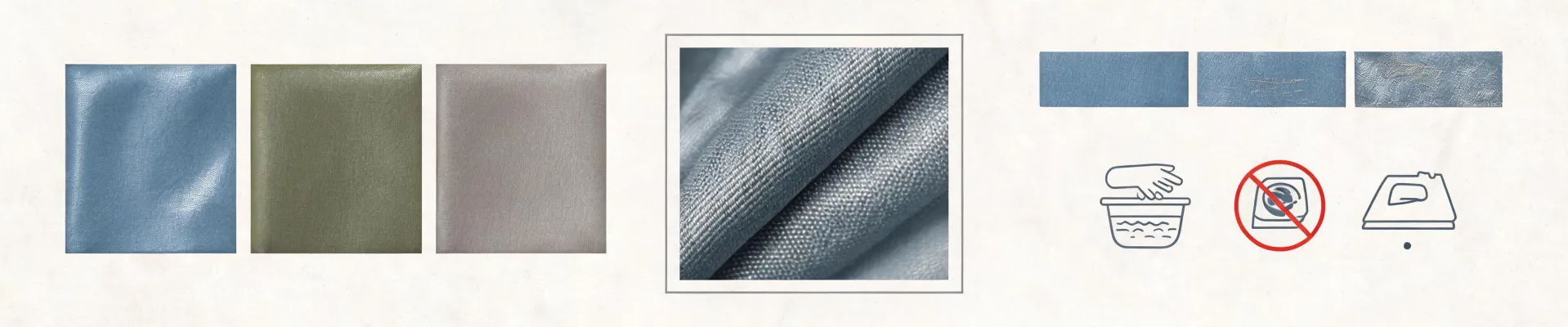
We sent three color samples overnight to the boat builder. Their designer picked one by noon the next day. I bumped the order from 60 to 70 yards so the trim shop had waste allowance, and the roll hit their dock before their shift ended on Thursday. The upholstery crew worked that evening. Friday’s delivery went out with seats that were documented for the use case.
It wasn’t a flawless two days. It was a workable two days. Better than the alternative: a phone call on Friday morning to a customer waiting for a finished boat.
What I changed after that order
The next week, I added a question to our rush-order intake form. It seems obvious now. I wish I’d added it years ago.
The question is: “Do you want OEM, or do you want private label?” Not as a gotcha. As a way to force clarity.
People use OEM to mean “made in a factory” and private label to mean “white-label fabric.” Those are not the same, and the difference matters most when you have no time to recover.
Here’s the version I use now:
- OEM: “This product must meet my spec.” If you can’t name the spec, ask for help. If you can, expect longer lead times and minimums.
- Private label: “This product comes from your line, with my name on it.” That can be fast, but verify the line’s intended environment before you brand it.
- Microfiber leather: a material family, not a guarantee. It can be great; it can also be the wrong tool. Ask for the test data.
And if a supplier markets a product as marine-grade but can’t show you the test data? That’s a red flag. It doesn’t mean the material is bad. It just means you can’t verify it, and in a boat, “trust me” isn’t a coating.
I still get rush-order calls. I still answer them. But now, when someone says “OEM,” I ask one extra question before I quote a lead time. It has saved more deadlines than any shipping upgrade I’ve ever paid for.
Editorial boundary
This article is an independent interpretation aid. Verify the exact collection, color, regional document, method and current commercial status with Spradling or an identified official channel. No affiliation, authorization, inventory or project approval is implied.

Lucia Bianchi
Lucia Bianchi is a woven apparel-fabric analyst covering cotton, linen, wool, rayon, denim, shirting, twill, satin, poplin, and blended garment fabrics. She applies the ISO 1833 series for fibre composition and ISO 105-C06 for laundering colourfastness while checking GSM, yarn count, usable width, shrinkage, skew, shade grade, drape, and surface defects. Her specification guides help designers, sourcing teams, and mills align fibre claims, lab dips, bulk tolerances, care conditions, and garment performance before production approval.