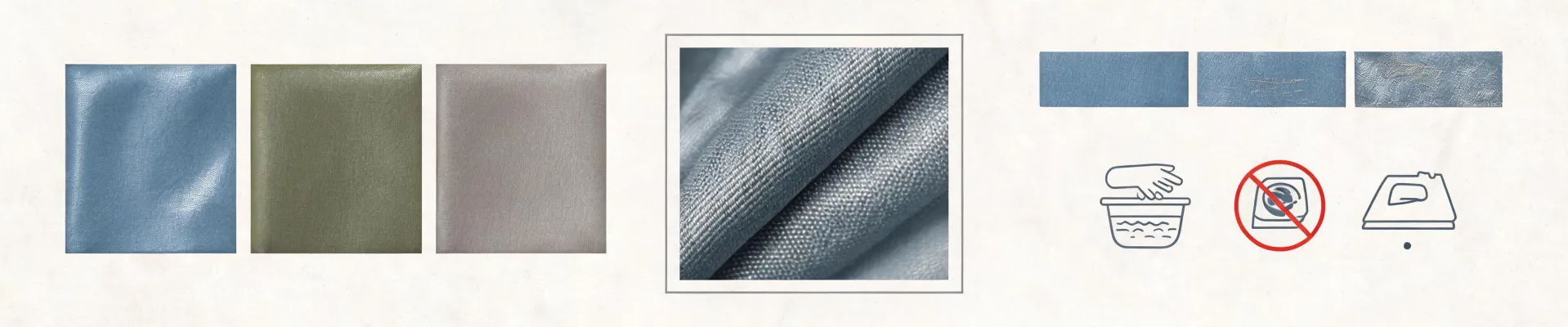
I'm a quality and brand compliance manager at a coated fabric manufacturer. I review physical samples, production lots, and compliance paperwork for a living—roughly 200 unique materials a year. In 2024, I rejected 11% of first-production lots that arrived with a 'this matches your approved sample' note.
I've seen this pattern many times. But when I say 'pattern,' I do not mean a one-off bad batch. I mean something that happens predictably when buyers and suppliers don't speak the same specification language. The rejections weren't for color or pattern. They were for spec drift: coating weight, backing construction, plasticizer content, or a compliance certificate that didn't match the material in the box.
The surface problem: it looks like you got 'bad material'
If you've ever specified faux leather for boat seating, upholstery, or automotive trim, you know the moment. You're sourcing Spradling marine vinyl or a comparable synthetic leather. The swatch feels right, the color matches what the designer picked, and the price fits the budget. Then the production order arrives, and something feels off. The material is slightly stiffer. It has a chemical smell. The abrasion test fails. Or the flammability document doesn't cover the actual end use.
The natural conclusion is that the supplier sent bad material. Sometimes that's true. But after years of reviewing these situations, I'd say the more common problem is uncomfortable: you didn't get 'bad material.' You got a production run that was made to a different specification than the swatch. And that difference wasn't visible on the surface.
That sounds like a story about manufacturers. It's really a story about how coated fabric is specified and sold.
The deeper problem: you're buying a swatch, not a system
This is where I ask you to sit with something unglamorous.
Vinyl isn't one material. It's a coated fabric. The face is a polymer coating. The back is a woven, knit, or non-woven substrate. The performance lives inside that structure. Plasticizers keep it flexible. Stabilizers protect it from heat and UV. Topcoats control gloss, dirt pickup, and abrasion. Coating weight determines strength and hand feel. Change one of those variables, and you have a different product—even if the color looks identical.
The 'vinyl is vinyl' thinking comes from an era when coated fabric was a commodity, and the main decision was which color to order. That era is gone. Today, a marine-grade vinyl and a budget residential upholstery vinyl can look almost the same in a cut book, but they are not the same material. They have different substrates, different plasticizer systems, different breathability, and different flame response.
If you specify 'marine vinyl' without saying anything else, you're not actually specifying a material. You're specifying a look. And a look does not pass compliance testing.
Faux leather compliance requirements are a system, not a single test
Faux leather compliance requirements are a maze, and the maze gets worse when you're buying in volume.
'Flame retardant' is not a universal property. For upholstered furniture, a supplier may reference California TB 117-2013. For automotive interiors, many OEM specs reference FMVSS 302. For public transit or contract seating, there may be additional smoke, heat release, or toxicity criteria. And flammability is only one slice of compliance. There's also abrasion resistance, hydrolysis resistance, mildew resistance, fogging, plasticizer migration, cold crack, and UV color fade.
Here's what I see in real orders: a buyer asks for 'flame retardant faux leather.' The supplier sends a data sheet for a flame-retardant formulation. Everyone feels good. But the data sheet is for a different end use. The material passes one test, not the test that applies to the customer's market. When the finished product fails at a lab or after field exposure, the buyer is blamed. That is not a quality failure. It's a specification failure.
I'm not a compliance attorney, and standards change. So the point is not to collect a clipboard of old certificates. The point is to define the requirement at the beginning, then verify that each production lot matches that requirement.
What 'bulk leather fabric' actually means
This brings me to one of the search phrases that shows up in almost every project: bulk leather fabric.
If you're looking for bulk leather fabric, you probably mean synthetic leather or a leather-look fabric in large quantities. That's fine. But 'bulk' is not a product specification. Bulk only tells a supplier that you want volume. It doesn't tell them which polymer, which substrate, which coating weight, which finish, or which compliance standard applies.
When you get quotes from different suppliers for 'bulk leather fabric,' you're often getting quotes for different products that all happen to look similar. One supplier quotes a 14-oz vinyl with a knit backing. Another quotes a 10-oz PVC with a woven backing. The lower quote isn't necessarily a better deal. It's a different material. If you don't specify the construction, you're choosing based on price without knowing what you're choosing.
Suede fabric is the same trap
Suede fabric is another place where the language gets loose. Real suede is made from animal hide. Microfiber suede is a synthetic textile. Suede-finish vinyl is a coated fabric with a napped or brushed texture. All three can be called 'suede fabric' on a product data sheet. All three perform differently in abrasion, cleaning, moisture, and heat.
If your drawing says 'suede fabric,' you have not given your supply chain enough information. You've given them a reason to choose the most cost-effective thing that fits the visual description. That's how a project ends up with a suede-look vinyl in an application that needed a breathable microfiber, or microfiber in a place that needed a cleanable vinyl with a specific hydrolysis rating.
I'm not saying one is always better. I'm saying they are not interchangeable in a compliance-driven project.
The cost of getting it wrong
Let me make this concrete.
In a Q1 2024 audit, we looked at every rejected lot we'd handled during the previous twelve months. Roughly two-thirds of the rejections were not about visually bad material. They were about materials that didn't match the approved specification. The coating was slightly thinner. The backing was a different construction. The color matched, but the finish had a different slip resistance. In most cases, the supplier wasn't trying to cheat. To be fair, someone in the buying process just didn't define the spec tightly enough, so each supplier used their own judgment.
That's where the costs hide. The sample cost is small. The rejected production lot is bigger. But the hidden costs are bigger still: line downtime, replacement production, expedited freight, missed launch dates, warranty claims, and the uncomfortable conversation with your customer about whether you know what you're doing.
One project I remember involved a batch of roughly 8,000 units of upholstery vinyl where the coating weight was visibly off—about 0.2 mm thinner than our written spec. Normal tolerance was 0.05 mm. The vendor claimed it was 'within industry standard.' We rejected the lot, and they reworked it at their cost. The lesson stuck: now every contract includes a minimum coating weight test and a lot-specific certificate.
The most expensive fabric isn't the one with the highest unit price. It's the one that gets cut into goods and then fails a test you didn't know about.
What actually fixes it
Here's the short version, because by now the fix should feel obvious.
Stop buying fabric the way you'd buy wallpaper. Buy it the way you'd buy a critical engineered component.
- Write the performance spec before you source. Is this for marine seating, residential upholstery, automotive trim, or contract furniture? Name the environment, the expected use, and the tests that matter. If you don't know, ask a supplier who will help you define it. That's not a sign of weakness. It's how good projects avoid surprises.
- Ask for lot-level documentation, not a one-time data sheet. A certificate that says 'this material is flame retardant' is only useful if it corresponds to the lot you received and the standard you need.
- Inspect a first production article before you authorize the full run. Check coating weight, backing, adhesion, smell, and finish. Do not rely on the swatch after production starts.
- Work with a manufacturer who controls the formulation. This is where Spradling comes in for a project like yours.
Spradling marine vinyl and Spradling vinyl for upholstery come from a manufacturer that formulates and coats the product itself. That matters because consistency is easier to control when the same team who developed the material is also accountable for producing it. It also means OEM and private-label programs can be set up around documented specs instead of trying to line up documentation for a formulation you didn't choose.
If you're searching for bulk leather fabric or suede fabric, use Spradling as a reference point: ask whether the quoted product is a vinyl, a microfiber, or a polyurethane-coated fabric. Ask what substrate it's on. Ask for the physical test data. Then ask for the same data on the production lot, not just the sample.
There's something satisfying about a project that goes from first article to production without a panic call. After the stress of a rejected lot, that's the payoff. The best part of having a verification protocol in place is no more 3 a.m. worry sessions about whether the fabric that came in matches the fabric you approved.
Bottom line
Faux leather compliance failures are rarely a mystery. They're almost always a spec problem wearing a material problem's clothes.
The sample is not the product. The certificate is only as good as the lot it covers. And the best time to fix a compliance issue is before you order the fabric, not after your production line stops.
So if you're ready to buy Spradling vinyl for marine, upholstery, or automotive, don't start with a color card. Start with the requirements. Then let the material be the thing that meets them.
Editorial boundary
This article is an independent interpretation aid. Verify the exact collection, color, regional document, method and current commercial status with Spradling or an identified official channel. No affiliation, authorization, inventory or project approval is implied.

Lucia Bianchi
Lucia Bianchi is a woven apparel-fabric analyst covering cotton, linen, wool, rayon, denim, shirting, twill, satin, poplin, and blended garment fabrics. She applies the ISO 1833 series for fibre composition and ISO 105-C06 for laundering colourfastness while checking GSM, yarn count, usable width, shrinkage, skew, shade grade, drape, and surface defects. Her specification guides help designers, sourcing teams, and mills align fibre claims, lab dips, bulk tolerances, care conditions, and garment performance before production approval.