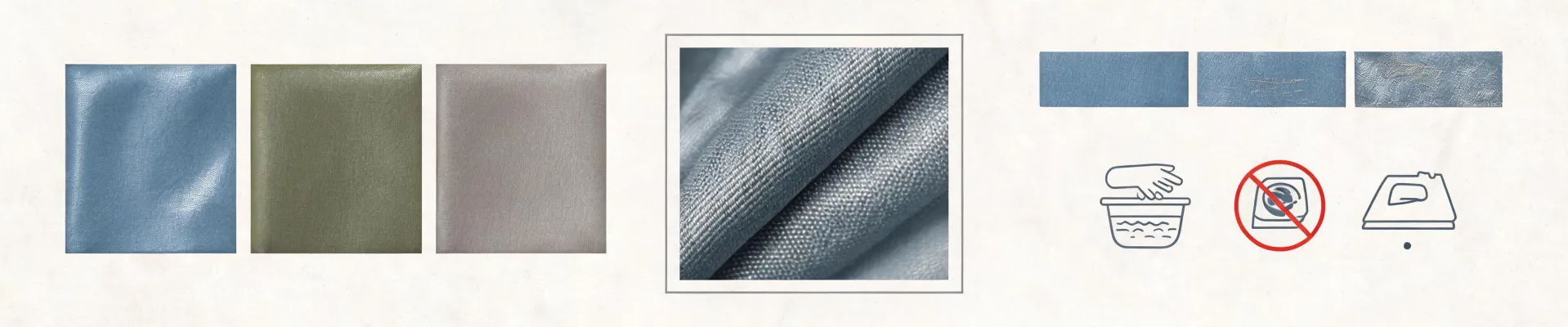
I've been handling upholstery and synthetic leather orders since 2017. Before that, I spent two years on the shop floor, cutting and sewing. So when I say I've made mistakes with fabric sourcing, I mean I've made expensive mistakes. The kind that gets you a reputation.
This isn't a "Spradling is the best" post. That's not helpful, because "best" depends on what you're building, where it's going, and who's buying it. What I can do is walk you through the real trade-offs I've seen between Spradling marine vinyl, spradling fabrics, suede fabric private label, and microfiber leather wholesale options. I'll share what I'd check before committing, and where I've personally burned budget learning the hard way.
What We're Actually Comparing
Before getting into the weeds, let's set the frame. Most buyers I work with fall into one of two camps:
- Camp A: Needs a coated fabric (vinyl/synthetic leather) that can handle abuse—boats, medical seating, automotive, heavy commercial use.
- Camp B: Needs a softer, more textile-like material—suede, microfiber leather, or a standard upholstery fabric—for furniture, accessories, or light commercial projects.
Those are different conversations, and I've seen buyers confuse them. A customer once asked me for "marine vinyl" seconds before describing a residential sofa project. Not the same thing. The comparison below is organized around the dimensions that actually matter when you're sourcing at wholesale or private label level.
Here's the core of it, up front:
Spradling's strength is in performance-coated fabrics. If you need marine-grade, chemical-resistant, or high-abrasion vinyl, that's the conversation. If you need a luxury handfeel for a boutique furniture line, microfiber leather or a quality suede might serve you better—and cost you less per yard, depending on the spec.
That's not me being wishy-washy. It's the honest truth from watching orders succeed and fail.
Dimension 1: Durability and Performance Claims
Let's talk about the elephant in the room: what "marine vinyl" actually means. It's not a regulated term. Anyone can print "marine grade" on a spec sheet. So the practical question is: does the material have the construction and testing to back it up?
Spradling's marine vinyls are engineered with specific backing constructions—typically a woven polyester or cotton backing—and they carry a range of performance properties. Some are designed to resist mildew, UV degradation, and cleaning chemicals. In my experience, that's where the brand earns its reputation. The construction is consistent, and the lot-to-lot variation is low. For a production run, that predictability matters more than any single spec number.
On the other hand, if you're comparing a 40 oz. coated vinyl against a microfiber leather, you're not comparing like with like. Microfiber leather is typically lighter, more breathable, and has a softer drape. It's also generally less resistant to harsh chemicals and heavy abrasion. That's not a defect—it's a different product category.
The comparison conclusion here: For high-abrasion, high-exposure environments, a properly specified marine vinyl from a manufacturer like Spradling wins. For indoor furniture where touch and flexibility matter, microfiber leather or suede will often outperform—both in feel and in how the material ages with everyday use.
One thing I should flag: I'm not a materials scientist, so I can't speak to the exact polymer chemistry of every product line. What I can tell you from a procurement perspective is that you should request the physical test data—abrasion, tensile strength, cold crack, mildew resistance—and compare that data against your actual use case. A spec sheet is a marketing document until it's verified.
Dimension 2: Cost Per Yard vs. Total Cost
This is where I see buyers get tripped up. The per-yard price of a 40 oz. marine vinyl is often — wait, let me rephrase that. It's usually higher than a standard microfiber leather or suede. But when you calculate the installed cost, the gap narrows, and sometimes the vinyl ends up cheaper in the long run.
Why? Several factors:
- Yield: A coated vinyl is often cut and sewn with less waste than a loosely woven fabric, depending on your pattern.
- Fabrication time: Thicker, stiffer materials can slow down sewing and require heavier-duty needles, which eats into labor cost.
- Rejects: If the material fails in post-production inspection, the replacement cost is on you, not the supplier.
I once quoted a project two ways: a domestic marine vinyl at $18.50/yard and an imported microfiber leather at $12.80/yard. The client went with the microfiber. After accounting for extra seam finishing and about 8% more waste due to stretch, the installed cost was within $0.40/yard. And that doesn't count the week of extra lead time for the replacement roll when the first batch had shade variation.
Now, if you're doing microfiber leather wholesale in volume—say, 1,000+ yards per month—the price advantage of microfiber can become significant. At that scale, even a $2/yard difference matters, and you can invest in the fabrication processes that handle stretch better. The right answer depends on your production setup. That's not a cop-out; it's how sourcing actually works.
The comparison conclusion: For small to medium runs, the durability and consistency of a performance vinyl often justify a higher per-yard price. For large-volume runs where you can control fabrication variables, microfiber leather wholesale pricing can win on total cost. I recommend you run your own cost model with your actual labor rates before deciding.
Dimension 3: Aesthetics and Handfeel
I'll be honest: this is the dimension where I underestimated microfiber leather for years. I was so focused on performance specs that I ignored what the end customer actually feels when they sit on it.
Microfiber leather has a handfeel that's remarkably close to natural suede—soft, slightly napped, and warm to the touch. It's a premium look at a fraction of the price of real suede. For suede fabric private label projects—furniture, throw pillows, headboards, automotive interiors—this is a compelling option. Your brand name goes on a product that feels expensive, and your margin thanks you.
Spradling fabrics, the non-vinyl side of the catalog, also includes options that balance durability and touch. But if a client walks in wanting "that soft, velvety feel," I now start with microfiber leather, not vinyl. Vinyl has come a long way—gloss levels are controllable, embossing is more realistic, and some lines feel far less plasticky than the stuff I worked with in 2017. But it's still a coated fabric. It doesn't drape like a textile.
Here's where I went back and forth on a recent project: the client wanted a maritime-grade material (✓ vinyl) but also wanted a "luxury yacht look" (✓ microfiber suede). I struggled with that one for about a week. The vinyl would last longer; the microfiber would look better. Ultimately, we split the order: vinyl for the exterior seating and microfiber suede for the interior cabin cushions. That's the kind of compromise that serves the customer better than forcing one material to do everything.
The comparison conclusion: If the aesthetic brief is "soft, suede-like, premium," microfiber leather is usually the right call. If the brief is "cleanable, durable, marine-grade," a performance vinyl from a brand like Spradling is the safer bet. And sometimes you need both—so plan your Bill of Materials accordingly.
Dimension 4: Compliance and Documentation
This is the unglamorous part of sourcing that separates professionals from amateurs. If you're selling to OEM customers or doing private label, you will be asked for documentation. The question is whether your supplier can provide it without a two-month delay.
Here's what I've learned to request upfront:
- Test reports for the physical properties you're claiming (abrasion, adhesion, cold crack, etc.)
- Flammability documentation, especially for upholstery applications. In the U.S., that often means CAL TB 117 or similar standards, depending on your market.
- Chemical compliance documentation—for example, Proposition 65, REACH, or RoHS, if applicable.
- A clear statement of what the material is not warranted for. This is the part buyers skip, and it comes back to bite them.
I made a rookie mistake in September 2022. I approved a beautiful suede fabric for a furniture client without checking the flame-retardant treatment documentation. The product arrived at the upholsterer, and the first question was: "Is this CAL TB 117 compliant?" I didn't have an answer. That was a $3,200 order held up for nine days, plus the rush fee for the actual compliant material we had to source as a backup. I still kick myself for that one. If I'd asked for the compliance sheet before ordering, I'd have saved the delay and the credibility hit.
Spradling, as an established manufacturer, typically provides this documentation for their coated fabrics. That's a meaningful advantage if your customers require traceability. Smaller suppliers can also provide it, but you need to verify the testing is current and the standards align with your market, not just "we passed some test in some country."
The comparison conclusion: For compliance-sensitive markets (marine, medical, contract furniture), go with a supplier that has documented, verifiable standards compliance—and don't take the marketing sheet at face value. For less regulated applications, you have more flexibility, but you should still build a documentation folder for every material you sell. You never know when a customer will ask.
Dimension 5: Supply Chain and Minimums
Let's talk about private label and OEM realities. If you're building your own brand—say, a line of custom boat seats or a boutique sofa collection—your choice of fabric supplier affects more than just the material. It affects your lead times, inventory risk, and ability to scale.
Spradling is a large manufacturer. That means stability, but it also means their minimums and lead times are built for certain volume levels. If you're a small startup ordering 50 yards to prototype, you may find the conversation less flexible than with a distributor or a smaller fabric house. That's not a criticism; it's the nature of a manufacturer's business model.
On the flip side, a suede fabric private label program with a mid-sized supplier might offer lower minimums and faster sampling. You can iterate more quickly, test colors, and adjust specs without committing to a container load. The trade-off is that you take on more responsibility for quality control and consistency.
I've been on both sides. I've ordered from large manufacturers where I had to plan six weeks ahead. I've also worked with small mills that shipped samples in three days and ran my production order in two weeks. Both worked. The difference was my planning discipline, not the supplier's competence.
The comparison conclusion: If your volume is consistent and predictable, a major manufacturer like Spradling offers reliability. If you're iterating, sampling, or building a new product line, smaller suppliers with lower minimums can be more agile. The key is to match your ordering pattern to the supplier's operational strength.
So Which One Should You Choose?
Here's my scenario-based recommendation, and I'll be honest about the limits of it:
- Choose Spradling marine vinyl if: you're making products for marine, medical, or high-abuse environments; you need consistent lot-to-lot quality; or your customers will demand performance documentation.
- Choose spradling fabrics (the broader coated fabric line) if: you need a reliable coated fabric for upholstery, automotive, or industrial applications, and you appreciate having a wide product range to consolidate orders.
- Choose suede fabric private label or microfiber leather wholesale if: your design brief calls for a soft, premium handfeel; you're building a furniture or accessories brand; or your cost model favors lighter materials at volume.
And if you're in the 20% of cases where the answer is genuinely "both"—like my yacht project—don't be afraid to split the order. A material that works in 80% of your products might still be the wrong one for that other 20%.
The best advice I can give, from someone who's paid for the lessons: get the test data, get the compliance docs, and run your own cost model. A supplier's brand, no matter how reputable, is a starting point, not a substitute for doing your homework. That's the approach that's kept me out of the "how did this happen again?" meetings for the past year and a half.
Editorial boundary
This article is an independent interpretation aid. Verify the exact collection, color, regional document, method and current commercial status with Spradling or an identified official channel. No affiliation, authorization, inventory or project approval is implied.

Lucia Bianchi
Lucia Bianchi is a woven apparel-fabric analyst covering cotton, linen, wool, rayon, denim, shirting, twill, satin, poplin, and blended garment fabrics. She applies the ISO 1833 series for fibre composition and ISO 105-C06 for laundering colourfastness while checking GSM, yarn count, usable width, shrinkage, skew, shade grade, drape, and surface defects. Her specification guides help designers, sourcing teams, and mills align fibre claims, lab dips, bulk tolerances, care conditions, and garment performance before production approval.