In early 2023, the operations manager at our company—I work at a 40-person charter boat marina on the Gulf Coast—walked into my office and dropped a folder on my desk. “We’re reupholstering the boats this spring,” he said. “Find us marine vinyl. Good stuff, but keep the costs reasonable.”
I’d been the office administrator here for about four years. I manage purchase orders, office supplies, vendor relationships—roughly $400,000 in annual spending across 10 vendors. Marine vinyl, though? That was new. I knew nothing about it. And I found out the hard way that knowing nothing about a material category you’re about to buy is a really expensive position to be in.
How I Found the “Cheap” Vinyl
I did what anyone does when they need to learn about an unfamiliar product: I Googled it and asked around. I reached out to three established distributors who carried reputable marine vinyl brands. Their quotes came in between $28 and $35 per yard, and they all sent spec sheets that I didn’t fully understand.
Then I found a supplier online—an import company out of the East Coast that offered “marine-grade vinyl” at $17 per yard. The photos looked fine. The spec sheet, now that I know better, was thin on details. But it was almost 40% cheaper than the next quote. As an admin whose boss was telling me to keep costs down, that number caught my attention.
Not going to lie, I was a bit proud of myself when I placed that first order. It was enough material for three boats as a trial. Saved the company roughly $2,400 off the premium quotes. I sent management an email with the savings figures.
Here’s where I should have known something was off. The “marine-grade” vinyl arrived and smelled different. Not bad, just chemically strong. My production lead said he’d seen similar material at discount fabric outlets. I didn’t push back. I figured it was fine.
The Budget Vinyl Falls Apart
It was fine. For about three months.
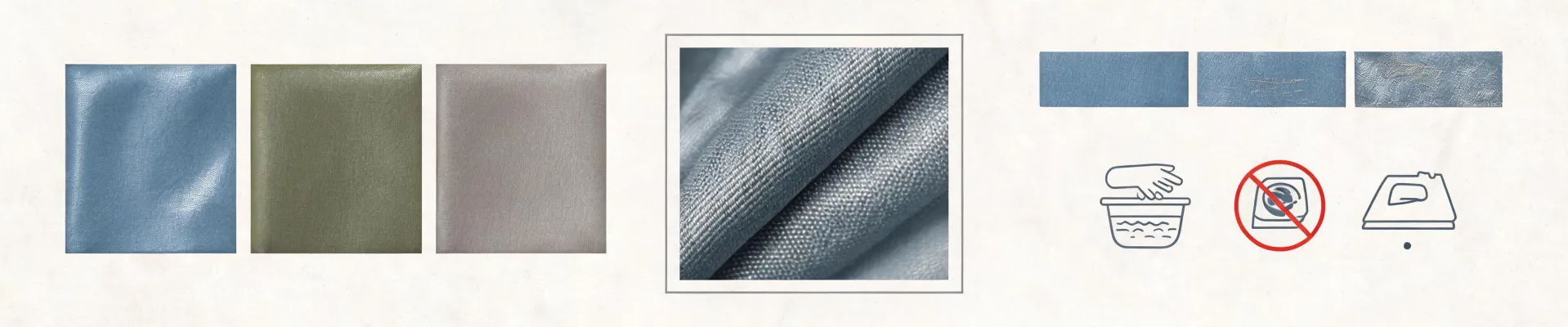
Never expected a material labeled “marine grade” to break down that fast. That summer, the first complaints came in. The seats on the charter boats were fading. Not in a subtle “the sun’s dulled the color a little” way. I mean patches of pinkish-white sunburn on what used to be dark gray. The vinyl was also cracking along the seams and, in the worst spots, pulling apart where passengers slid across the seats getting in and out.
By the end of July, we had a decision to make about all 12 boats. But the three “faded” ones were booked for the rest of the summer. We couldn’t take them offline during peak season. So we used temporary cushions and apologized to at least four different charter groups.
Let me be clear about something I learned the hard way:
From the outside, cheap vinyl looks exactly like expensive vinyl in the showroom. The reality is that the PVC formulation, the backing weight, and the UV stabilizer package determine whether it lasts two years or ten.
I didn’t know any of those words when I placed that order. There was no one to blame but me for not learning them before spending the budget.
We finally re-did those three boats in September—or rather, early October, because we had to wait for the charter calendar to open up. The math was brutal:
- Original “savings”: roughly $2,400
- Replacement material: $3,150 if I remember correctly (from a reputable vendor this time)
- Labor for removal and re-installation: $4,800
- Lost charter revenue: I don’t even want to think about it. At least $5,000.
So the “cheap” option cost us somewhere around $9,400 in direct expenses, plus four guest complaints, one angry VP, and countless hours of my time managing the whole mess.
That $2,400 in savings turned into a $14,800 problem. And the cheap vinyl wasn’t just affordable—it was deceptive. The supplier’s website had said “marine grade.” I’m still not sure what standard they were testing against. I suspect “marine grade” meant “we also sell it to boaters.”
What I Learned After the Fact
After that disaster, I did my homework. I talked to real distributors, not just whoever had the best Google shopping placement. And I learned some things I genuinely wish I’d known in March.
1. Established manufacturers matter
One name kept coming up in every conversation: Spradling. They’re a US-based manufacturer that’s been making coated fabrics since the 1940s, and their marine vinyl is a staple in the industry. You’ll find Spradling fabrics on commercial charter boats, in dental chairs, on restaurant seating, in RV interiors—pretty much anywhere surfaces take heavy abuse.
Here’s what separates Spradling marine vinyl from the generic import:
- Abrasion resistance: engineered for heavy use with very low wear in standard flex and abrasion tests.
- Backing fabric: the polyester knit backing is high-weight and well-laminated, which affects how well the material installs and stays put.
- Mildew and UV resistance: treated with antimicrobials and UV stabilizers specifically for marine exposure.
- Color consistency: Spradling maintains tight color control across production batches.
None of these things showed up on the $17-per-yard spec sheet. That sheet only listed thickness and “excellent weather resistance.” No test methods, no numbers, no standards.
I also learned about Delta E—the standard metric for color difference used in the Pantone Matching System. For brand-critical colors, industry practice is to keep Delta E under 2, which means a trained observer can’t easily tell two batches apart. If a manufacturer can’t hold that tolerance across batches, your fleet’s “navy blue” might end up as two slightly different blues.
2. Silicone leather is not vinyl
During my research, I also looked into silicone leather. It’s a completely different material category—a premium coated fabric with a silicone-based surface rather than PVC. The advantages are real: softer hand feel, better heat resistance, longer lifespan in UV-exposed environments, and it doesn’t get stiff in cold weather.
We didn’t end up using silicone leather for the charter boats because the price point was well beyond our seat budget. But I spent a week talking to a silicone leather distributor’s sales reps, and I explored the idea briefly with our team.
If you’re considering a silicone leather private label program, the due diligence is even more critical than with vinyl. When you put your brand on a material, you’re staking your reputation on someone else’s manufacturing quality. Before you sign anything:
- Visit the factory, or at minimum arrange a video audit
- Ask for their testing protocols and standards reference
- Request a full reference batch that you can inspect and test yourself
- Establish a written quality agreement with clear defect and return policies
In a way, I’m glad I went through the cheap vinyl fiasco before exploring private label options. It taught me that you can’t outsource accountability.
What to Look for in an Artificial Leather Distributor: A Buying Guide
If you’re reading this because you’re about to buy marine vinyl or any kind of artificial leather, here’s the checklist I now use. Learn from my mistake—it’s a lot cheaper that way.
Know the manufacturer, not just the distributor
A good distributor is valuable, but you need to know whose factory is actually producing the material. Is it Spradling? Another reputable mill with documented coating and testing standards? Or an unnamed “large manufacturer”? If the distributor can’t tell you exactly where and by whom the material was made—and provide certificate testing against recognized standards—walk away.
Get a physical sample. Then test it.
A swatch in a brochure is not enough. Ask for a full sample, take it to your shop, give it to your most opinionated installer, and let them try to stretch it and scrape it. A 10-minute hands-on test is worth more than ten pages of spec sheets.
Read the warranty—it says a lot about the manufacturer
Ask about the manufacturer’s warranty and how failures are handled. Spradling, for example, publishes clear warranty documentation for each product line. A warranty isn’t just insurance; it’s an indication that the manufacturer believes their product will hold up. The no-name import had no warranty to speak of—and now I know why.
Where We Landed
We ended up ordering Spradling marine vinyl through a distributor that supports a lot of marine manufacturers in the Gulf region.
It cost $31 per yard. I fought that number at the time, because part of me was still comparing it to $17.
Two seasons later, the boats with Spradling look almost exactly as they did when they were installed. No fading. No cracking. No seam issues. We’ve now re-covered all 12 boats. The other nine, which still had the original budget vinyl, started showing the same sunburned, cracked wear within six months.
I have mixed feelings about the whole experience. On one hand, the $9,400 mistake was painful—in a small business, that’s real money. On the other, it made me a much better buyer. I now understand that unit price is just one slice of the total cost of ownership. The cheapest bid is often the most expensive choice in disguise.
If you’re shopping for an artificial leather distributor, here’s my advice: buy from someone who can name the manufacturer, show you the specs, provide the test data, and stand behind the warranty. The bargain material will save you money at first and then take it back—with interest.
Editorial boundary
This article is an independent interpretation aid. Verify the exact collection, color, regional document, method and current commercial status with Spradling or an identified official channel. No affiliation, authorization, inventory or project approval is implied.

Lucia Bianchi
Lucia Bianchi is a woven apparel-fabric analyst covering cotton, linen, wool, rayon, denim, shirting, twill, satin, poplin, and blended garment fabrics. She applies the ISO 1833 series for fibre composition and ISO 105-C06 for laundering colourfastness while checking GSM, yarn count, usable width, shrinkage, skew, shade grade, drape, and surface defects. Her specification guides help designers, sourcing teams, and mills align fibre claims, lab dips, bulk tolerances, care conditions, and garment performance before production approval.