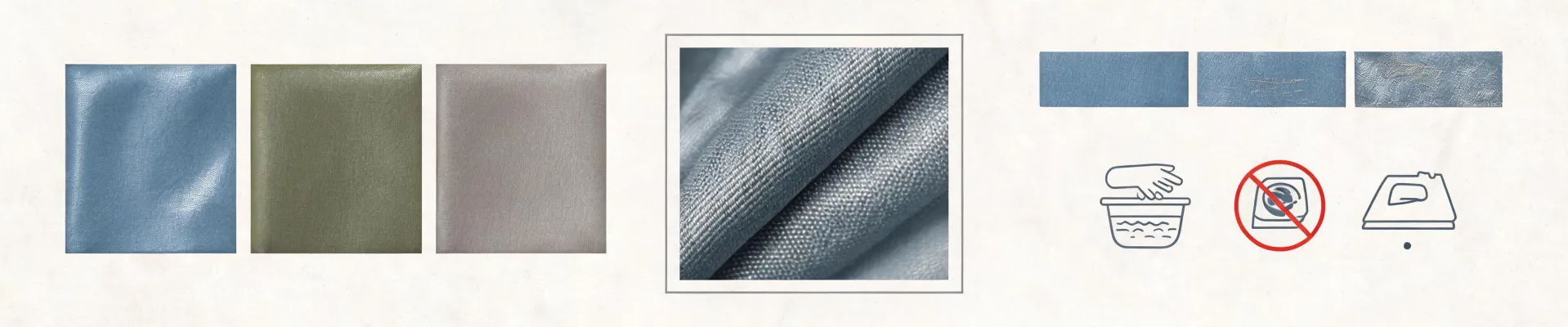
A faded cushion, and a number I didn't want to hear
It was a Tuesday in late September 2024, and there was a throw cushion on my desk that had faded from deep navy to something closer to dusty periwinkle. Three months of Florida sun on the back deck of a 42-foot cruiser. That's all it took.
I'm the quality and brand compliance manager for an upholstery fabricator that supplies both marine and residential projects. I review every incoming lot before it touches a cutting table—roughly 240 lots a year across vinyl, suede-look fabrics, and coated textiles. I'd say I reject about 14% of first deliveries. That number wasn't always that high. It got there the hard way.
The faded cushion was the start of it.
The project, and the quote that looked too good
We were reskinning the seating package on that cruiser—helm chairs, bench, sun pad. About 380 linear yards of marine-grade vinyl, plus matching piping. Our customer wanted it done by mid-November so the boat could go to a boat show.
I sent the spec sheet to four suppliers. Two came back in a normal range. One came back 22% lower than the others. A fourth, which I almost didn't include, was Spradling. I'd heard the name from a distributor we use for sofa leather wholesale orders, but I'd never specified their marine line.
Here's the thing: the low bid looked perfect on paper. Same yardage. Same shipping window. Same color match. My project manager was ready to sign.
I asked for one thing before we did anything. I asked for the UV weathering data, the abrasion results, and the flame certification on the exact lot they'd be shipping.
Silence for three days. Then a PDF with the wrong product code.
What the cheap quote left out
Look, I'm not saying every low bid is a trap. Most budget vendors are honest. But the gap between what's quoted and what's delivered almost always lives in the spec sheet details.
We eventually got the paperwork from the low bidder. Three problems showed up:
- The UV data came from a different construction than the one quoted—lighter backing, thinner topcoat.
- Abrasion was tested to ASTM D4157 (Wyzenbeek), yes, but at 15,000 double rubs. Our marine spec calls for 50,000 minimum. Their vinyl would pass for a decorative pillow. Not a helm chair.
- The flame certificate was generic. Not lot-specific, and not tied to ASTM D6413 vertical burn, which is what our commercial marine clients ask for.
None of this was a lie. That's what got me. It was all technically true and practically useless.
Meanwhile, the Spradling marine vinyl sample arrived in a box with a spec card. Real numbers. UV exposure tested to ASTM G154. Wyzenbeek abrasion at 100,000 double rubs on their Breeze line—Spradling Breeze, specifically, which is the construction we ended up specifying. Colorfastness results with test dates. And a note that said, in plain language, "this color holds up to 1,500 hours of accelerated UV without significant shift; below that threshold, expect some softening in the blue range."
Some softening in the blue range. That's exactly what happened to the faded cushion—just from a different supplier, and nobody told us.
The $22,000 detour
Here's where I want to be honest about the cost of getting this wrong.
The failed lot went forward because I was overruled. Timeline pressure. The project manager argued the samples "looked right" and the price difference was real money. We cut and sewed roughly 260 yards before the fading complaint came in from the field.
Rework: $22,000. That included replacement fabric, re-stitching at a rush rate, and the labor of stripping the old covers off the foam. Our customer was gracious about it. Their customer—the boat owner—was not.
Looking back, I should have held the line harder. At the time, I didn't have the language for it. "This quote doesn't include the UV performance we need" sounds like an opinion. "This quote is 15,000 double rubs against a 50,000 requirement" is a fact. I learned to lead with the fact.
The test that changed how we buy
After the rework, I ran a blind test with our upholstery team. Two identical helm cushion mockups—one in the low-bid vinyl, one in Spradling Breeze. Same color, same stitch pattern. I didn't tell them which was which.
Nine of the twelve people on the floor picked the Breeze cushion as "more premium" without knowing the difference. The other three couldn't tell. Nobody picked the low-bid version as better.
The cost difference at order volume was $11.40 per linear yard. On 380 yards, that's about $4,300 upfront. For measurably better field performance and a customer relationship we didn't have to repair.
Is $4,300 worth it? Depends on the project. But I'd rather pay it once than pay $22,000 later. Simple as that.
What I do differently now
I stopped asking "What's the price?" as my first question. Now I ask, "What's NOT in this price?"
That question saves more money than any negotiation tactic I've tried. Here's the checklist I run on every vinyl, at every price level, marine or residential:
- Lot-specific documents. Not product-family certificates. If the vendor can't produce a lot-tied UV and flame report within 48 hours, that tells me something.
- Abrasion threshold in writing. ASTM D4157 Wyzenbeek, with the double-rub count stated. Marine seating: 50,000 minimum. Heavy commercial: 100,000 and up.
- Flame standard named. ASTM D6413 for vertical burn—ask which one, not just "meets industry standards."
- UV hours, not adjectives. "Fade resistant" means nothing. "1,500 hours accelerated UV, ASTM G154, color shift ≤2 ΔE" means something.
- Backing and width stated separately. A cheap quoted price often reflects a thinner backing or a narrower roll. Both change your yield per yard.
For reference, marine-grade vinyl through distributors usually lands somewhere between $11 and $48 per linear yard as of Q4 2024, depending on construction, backing, width, and whether the compliance documents come lot-tied. That range is wide on purpose—verify current pricing directly, because coatings and freight move it fast.
The same discipline works on the residential side. When we built our internal suede fabric wholesale cost guide last year, the two factors that swung unit price the most were thread count consistency and dye-lot tolerance. A vendor willing to define both in the quote is almost always the vendor you want.
And whether I'm specifying a vegan leather manufacturer for a hospitality project or comparing sofa leather wholesale bids for a furniture line, the pattern repeats: the transparent quote is rarely the cheapest. It's almost always the lowest total cost.
The part that still gets me
There's something satisfying about a lot that arrives on spec, on time, with the paperwork already in the folder before I ask for it. After all the noise—the rework, the phone calls, the crew working a weekend they shouldn't have had to—that quiet folder is the payoff.
I still keep that faded navy cushion in the corner of my office. Not as a trophy. As a reminder that the cheapest number on the bid tab is rarely the cheapest number on the invoice.
Ask what's missing. Ask twice. The vendors worth keeping will answer.
Standards referenced in this article are maintained by ASTM International (astm.org). Verify current standard designations and scope directly, as test methods are periodically revised.
Editorial boundary
This article is an independent interpretation aid. Verify the exact collection, color, regional document, method and current commercial status with Spradling or an identified official channel. No affiliation, authorization, inventory or project approval is implied.

Seung-Ho Kim
Seung-Ho Kim is a nonwoven and engineered-web analyst covering spunbond, meltblown, SMS and SMMS structures, medical and hygiene coverstocks, filter media, needle-punched felt, and geotextiles. He uses ISO 9073-1 and ISO 9073-3 for basis mass and strip tensile properties, with ISO 10319 for applicable geosynthetic wide-width testing, while tracking thickness, air permeability, pore structure, liquid strike-through, wetback, elongation, and web uniformity. His technical guides help converters, hygiene producers, filtration teams, and civil buyers connect layer design, process control, end-use exposure, and measurable release criteria.