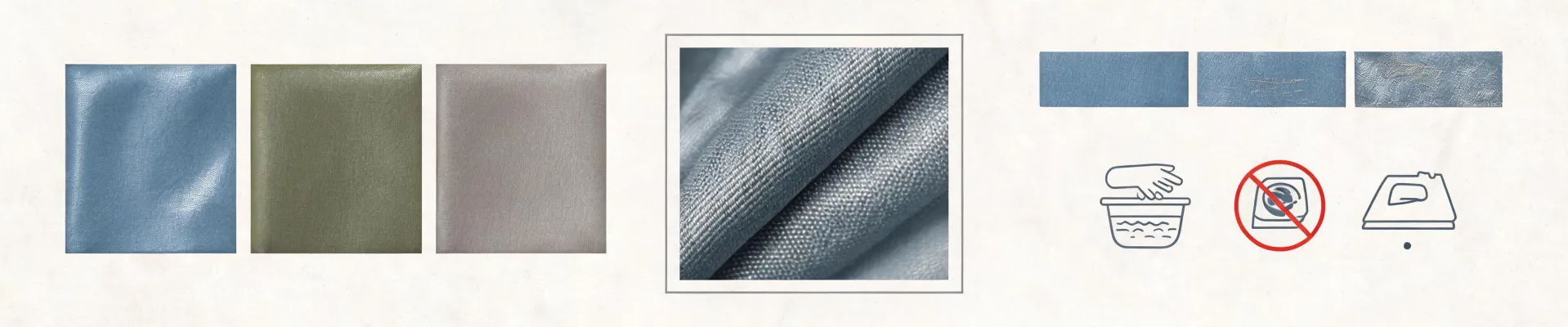
When I first started managing procurement for coated fabrics, I assumed the lowest price per yard was the right answer. Three budget overruns later, I stopped looking at unit price first. That's why this article won't tell you one 'best' supplier. Instead, here are the scenarios I've learned to sort suppliers into, and what to ask before you order.
My background: I'm a procurement manager at a mid-size upholstery manufacturer. I've managed a materials budget of roughly $600,000 a year for 8 years, and I've negotiated with about 40 vinyl and synthetic leather vendors in that time. Spradling is one of the names in our system. When I search for spradling fabrics, the marine line is usually the first thing I see. It should be, because marine vinyl is what they're known for. But 'Spradling' also shows up in furniture upholstery and OEM/private label discussions. They're not the only option, but they're a useful anchor for this conversation.
First, Which Scenario Are You In?
There is no universal standard for synthetic leather. There is, however, a decision path. Four situations cover most B2B buyers I talk to: marine, automotive, private label, and general PVC leather sourcing. The right supplier for one can be wrong for another.
Scenario 1: Sourcing Marine Vinyl
If your customers are boaters, the material spends its life in sun, salt, freshwater, and humidity. The primary questions are UV stability, mildew resistance, flexibility, and backing durability. Spec sheets can look similar. They're not always.
Spradling marine vinyl is one option I check when a client needs a broad range of colors and embossed patterns. From a procurement standpoint, what matters is whether the supplier backs the spec sheet with test data. If a supplier claims a marine-grade material, ask: Which UV test? How many hours? What method for mildew? How does that measurement compare with other materials? Not all 'marine' claims mean the same thing.
The hidden cost in marine vinyl is often the backing. Some materials have a woven or knit backing that adds strength and resists tearing. Others use a lighter scrim. That difference may not show up on a single-yard sample, but it will show up in warranty claims. Note to self: always request a price quote for two backing options when comparing.
Scenario 2: Sourcing Automotive Leather
Automotive is a different animal. The end-use is stricter, and the specs are less flexible. A material that survives a boat interior may still fail in a vehicle cabin. A car interior material needs to meet Original Equipment Manufacturer (OEM) requirements for abrasion, fogging, low VOC emissions, cold crack, and often seam slip. If you're searching through an automotive leather catalog, you need to compare the test data, not just the finish.
I'm not a materials chemist, so I can't tell you which chemical formulation is right for your seat. What I can tell you from procurement is: if a supplier can't produce the specific OEM test report for the exact grade you're ordering, assume the data doesn't exist. I once assumed 'same specifications' meant identical results across two suppliers. Didn't verify. Turned out each had slightly different testing conditions. The material failed at the second step of our own validation. It cost us about $1,200 in lab fees and two weeks of schedule. (Ugh.)
If you're talking to a microfiber leather supplier, the cost picture is different. Microfiber synthetic leather tends to have a higher upfront cost than PVC, but sometimes better durability-to-weight and lower VOC. That's worth something in an interior. But don't pay the premium until you've tested their specific grade in your climate. A higher price per yard can be the smart buy if it prevents a costly problem later. A recall is always more expensive.
Scenario 3: Building a Private Label or OEM Product
When you put your brand on a roll of vinyl, the supplier's quality system becomes your quality system. This is where Spradling's OEM/private label support matters. It's not about the logo on the tube. It's about whether the supplier can provide a certificate of analysis, batch traceability, and tolerance data for every order. If a supplier can't tell you exactly what changed between Batch A and Batch B, your brand absorbs that uncertainty.
The key question: What is the minimum order quantity, and how is color matched? A supplier will happily quote a low per-yard cost, then require a minimum that uses only one of your three SKUs. That's not necessarily a trick, but it's a risk. I've learned to ask 'what's NOT included' before 'what's the price.' You'd be surprised how often the answer changes the picture.
Scenario 4: What to Look for in a PVC Leather Supplier
For anyone sourcing general PVC leather—for furniture, bags, or any product where the main requirement is 'durable and cleanable'—I boil it down to four things: formulation transparency, color and gauge consistency, testing documentation, and pricing structure. The fifth is communication. If it takes four emails to get a straight answer, your future orders will take four emails too.
PVC leather has a reputation problem. Some suppliers respond by making vague environmental claims. The Federal Trade Commission's Green Guides say environmental claims must be truthful and substantiated. If a supplier calls their PVC leather 'eco-friendly' or 'recyclable,' ask for the test report and the recycling stream. This isn't about blaming one material. It's about not paying extra for an unverified label.
When comparing quotes, don't compare the line-item price in isolation. Ask for a full list of additional costs: sample fees, slitting, freight, minimum batch charges, color-matching fees, and lead time. Transparent pricing is a feature.
The vendor who lists all fees upfront—even if the total looks higher—usually costs less in the end.
The Total Cost of a PVC Leather Supplier
It took me about six years and maybe 120 orders to understand that 'cheap per yard' is often a decoy. Total cost includes your time managing issues, the cost of rejected rolls, the risk of delays, and the potential need for re-inspection. What I mean is this: if you save $0.10 per yard but have to reject one container because of color variation, the discount disappears instantly. For a $40,000 order, a one percent problem rate can wipe out several thousand dollars in hidden costs. That's why I'd rather sign with a supplier who says, 'Here is our standard tolerance, here is what it costs if you need a tighter tolerance, and here is what is not included.' I'm not 100% sure there's a perfect supplier out there, but I'm very sure that hiding fees is a red flag.
My experience is based on mid-size orders in upholstery and light marine. If you're doing aerospace or luxury automotive, your requirements will be different, and no general guide can replace your own qualification process.
How to Decide
Here's a practical route to figure out which scenario you're in, and what to ask next.
- Sun and moisture are the enemy? You're in marine territory. Check UV and mildew test data, and ask about backing reinforcement.
- The material enters a vehicle cabin? You're in automotive territory. Compare OEM-specific test reports, not marketing language. Check for a real automotive leather catalog with grade-by-grade data.
- Your brand name goes on the finished product? You're in private-label territory. Demand batch traceability and a certificate of analysis for every shipment.
- You just need a reliable workhorse material? You're in general PVC leather territory. Prioritize consistency, communication, and full pricing.
If you're still unsure, order samples from three suppliers. Before you test them, ask each supplier to explain exactly what their sample does and doesn't include. The supplier that answers clearly tends to be the one you can rely on when a real problem comes up. And in this business, a problem will come up. Not ideal, but workable if the supplier is honest.
Editorial boundary
This article is an independent interpretation aid. Verify the exact collection, color, regional document, method and current commercial status with Spradling or an identified official channel. No affiliation, authorization, inventory or project approval is implied.

Lucia Bianchi
Lucia Bianchi is a woven apparel-fabric analyst covering cotton, linen, wool, rayon, denim, shirting, twill, satin, poplin, and blended garment fabrics. She applies the ISO 1833 series for fibre composition and ISO 105-C06 for laundering colourfastness while checking GSM, yarn count, usable width, shrinkage, skew, shade grade, drape, and surface defects. Her specification guides help designers, sourcing teams, and mills align fibre claims, lab dips, bulk tolerances, care conditions, and garment performance before production approval.