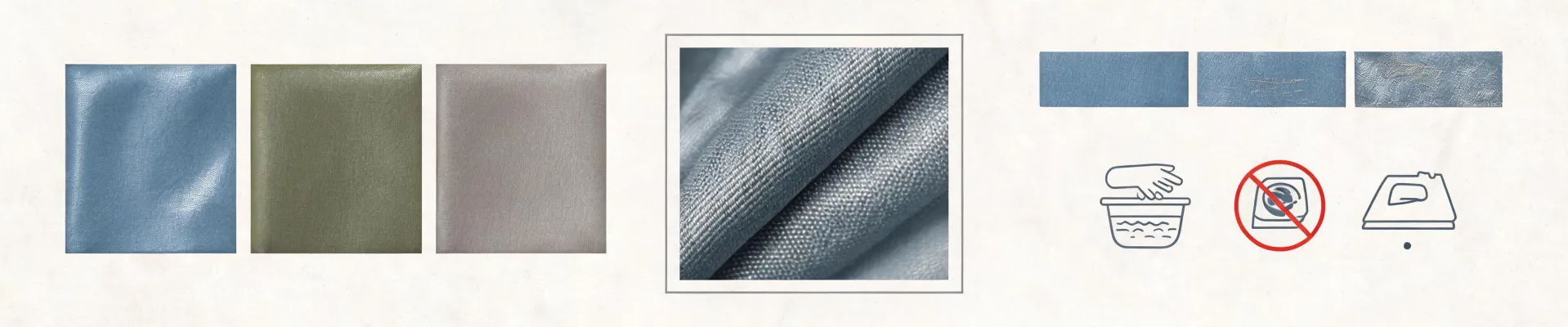
The short answer
If you're sourcing microfiber leather or marine vinyl at wholesale volume, the single most useful thing I can tell you is this: the data sheet is a filter, not a decision. Over four years of reviewing incoming rolls at a furniture and marine upholstery brand, I've rejected somewhere between 12% and 20% of first shipments. Most of those rejections had nothing to do with the material being "bad." The sheet matched. The roll didn't.
So here's the rule our buyers use now: qualify with physical samples across two or three production lots before you trust a spec sheet at volume. If a supplier won't send multi-lot samples, that tells you something too.
Why you should weight this opinion (a little)
I review every incoming roll before it reaches production—roughly 200 to 300 items a year across marine, upholstery, and light automotive programs. I don't run the machines. I don't sell the fabric. My job is to catch the gap between what was promised and what showed up, and to write the spec that makes the next shipment match.
That means I've been the person on the phone when a $28,000 order shows up two shades off and the vendor's rep says "that's within industry standard." It's my job to say: not within ours.
What the spec sheet won't tell you
1. Color is the number one killer—but only in context
Delta E is the standard measure of color difference. Under about 2, most people won't notice. Between 2 and 4, a trained eye will. Above 4, almost anyone will, especially side by side.
Here's the catch: a lot of suppliers quote "Delta E < 3" and then ship a roll that measures 3.2 against your approved standard—because they measured against their internal reference, not yours. Specify the reference tile. Specify the spectrophotometer setting (D65 / 10°, typically). Specify who owns the master. If you skip that, you get to have the argument later.
2. Hand feel doesn't show up on paper
This is the one that gets buyers in trouble with soft-hand marine vinyl, like Spradling's Softside line. Two fabrics can both say "PVC-backed, soft hand, marine grade" and feel completely different in the hand. One will feel like a mid-tier hotel headboard. The other will feel like a boat cushion you'd actually want to sit on.
The way I test it: pull the roll out of the crate, let it sit at ambient temp for an hour (not in the warehouse cold room), and do a blind comparison against the approved sample. If I can tell which is which without looking at the label, the batch fails.
Yes, this sounds fussy. It's the single most reliable predictor of whether the finished product feels premium, and feel is what customers judge before they read any spec.
3. Abrasion numbers are almost meaningless on their own
Wyzenbeek (ASTM D4157) and Martindale (ASTM D4966) both produce numbers that vendors love to quote. 100,000 double rubs. Looks great. Here's the uncomfortable part: a 100,000 Wyzenbeek can still crack in cold weather on a boat, because abrasion and cold crack are different failure modes, tested on different equipment.
For marine specifically, I care about three numbers, and I care about the order of them:
- Abrasion (Wyzenbeek or Martindale—pick one and stay consistent)
- Cold crack, tested at the lowest temperature the product will realistically see. For most US marine work, that's around -10°F to -20°F depending on region. A "marine grade" claim with no cold crack spec is a marketing phrase, not a spec.
- UV / lightfastness (AATCC 16 or ISO 105-B02), typically 200+ hours for exterior work
If the vendor's sheet only gives you abrasion, ask for the other two. If they don't have them, that's your answer.
4. The backing is where the cost went
Nobody puts the backing construction at the top of the sheet. It's usually a line near the bottom: "knit backing, 100% polyester" or "non-woven." That line decides whether the material stretches, tears, or sags after a few thousand cycles.
When I compared two supposedly identical rolls—same top surface, same color, same hand, different backing—the difference after our fatigue machine ran them was not subtle. One held shape; the other had visible sag at the seam within three weeks of simulated use. Same spec sheet. Different product.
The cost question nobody asks upfront
I've learned to ask "what's NOT included" before I ask "what's the price." The quote is never the cost.
What typically shows up later on a wholesale vinyl order:
- Minimum order quantity applied per color, not per order (so a 500-yard order across three colors becomes three 500-yard MOQ hits)
- Freight, particularly on oversized rolls—this can swing the landed cost by 8–15% depending on where you are
- Custom color setup fees, if you're doing private label
- Packaging: flat-fold vs. roll, and whether the roll comes on a core you can actually use
- Sample fees you were told wouldn't be charged, but were
The vendor who lists all of this upfront—even when the total looks higher—usually costs less at the end of the quarter. Not always. But usually.
The one thing I don't do is assume a low quote means someone is being shady. Sometimes it's just a different cost structure, a different factory, a different position on the volume curve. But I do assume that anything not written down is a thing I'll be told about later, at a moment when I have less leverage to negotiate.
When this advice doesn't apply
If you're buying 200 yards of standard black marine vinyl for a one-off interior refresh, skip most of this. Buy it from a distributor who has it on the shelf, check the color against your existing cushion, and move on. The economics of multi-lot qualification don't make sense at that scale.
Same if you're prototyping. You want cheap, fast, and "good enough to see the shape." Save the qualification work for the production order.
And honestly, I don't have hard data on how much of the industry's "first delivery rejection" rate is caused by spec ambiguity versus actual defects. My gut says it's more than half ambiguity—buyer and supplier reading the same sheet and meaning different things. But I've never tracked it cleanly enough to put a number on it I'd defend publicly.
What I can defend: every contract we've written since 2023 has a signed color master, a named backing spec, and a cold crack temperature. Our rejection rate on first deliveries dropped from around 19% to just under 8% in the first year. Same suppliers, mostly. Different paperwork.
Editorial boundary
This article is an independent interpretation aid. Verify the exact collection, color, regional document, method and current commercial status with Spradling or an identified official channel. No affiliation, authorization, inventory or project approval is implied.

Dalia Nasser
Dalia Nasser is a textile fibre and yarn analyst specializing in cotton, wool, polyester, nylon, viscose, lyocell, elastane, recycled filaments, staple fibres, technical yarns, and sewing threads. She applies ISO 2061 twist measurement and the ISO 1833 series for blend analysis while comparing tex or denier, tenacity, elongation, evenness, twist direction, moisture regain, filament count, dye uptake, contamination, and lot consistency. Her sourcing notes help spinners, weavers, knitters, and product teams translate fibre declarations and yarn specifications into stable processing and fabric performance.