-
FAQ: Evaluating PVC Leather Suppliers, Faux Leather Distributors, and Marine Vinyl
-
1. What really matters when evaluating a PVC leather supplier?
-
2. How do I avoid getting fooled by a faux leather distributor's sample?
-
3. What is Spradling Breeze, and where does it fit?
-
4. How should I evaluate PU leather manufacturers?
-
5. What specs should be in an OEM or private label vinyl contract?
-
6. Why do the cheapest quotes end up costing more?
-
7. What compliance documents should I request before ordering?
-
8. How can I speed up supplier qualification without losing quality?
-
1. What really matters when evaluating a PVC leather supplier?
FAQ: Evaluating PVC Leather Suppliers, Faux Leather Distributors, and Marine Vinyl
I'm a quality and brand compliance manager at a marine and upholstery fabric company. I review every vinyl and synthetic leather sample before it reaches customers—roughly 200+ swatches and production lots a year. In 2024, I rejected about 14% of first deliveries because of backing, color, or finish inconsistencies.
So here are the questions I get from buyers, product managers, and OEM teams. Short answers, based on what actually shows up on the dock.
Quick index: supplier evaluation, sample traps, Spradling Breeze, PU manufacturer vetting, OEM specs, cheap quotes, compliance docs, and faster qualification.
1. What really matters when evaluating a PVC leather supplier?
From the outside, choosing a PVC leather supplier looks like a price-and-swatch exercise. The reality is you're qualifying their process control. I look at backing adhesion, coating weight tolerance, color consistency under D65 light, cold crack, abrasion, UV, and mildew resistance. Ask for lot-to-lot test data, not just a single pass report.
In our Q1 2025 audit, I reviewed 42 production lots. Three failed backing adhesion after heat exposure. The vendor's sample was fine. The production rolls were not. That's the gap you're trying to close.
Efficiency matters here: a supplier that can send digital spec sheets and batch records in one package saves a ton of back-and-forth. If they make you chase paperwork for every lot, that's a preview of your production schedule.
2. How do I avoid getting fooled by a faux leather distributor's sample?
If you've ever opened a roll and seen color drift from the swatch, you know that sinking feeling. A faux leather distributor can show you a beautiful A4 sample that came from a hand-picked lot. That is not the same as production.
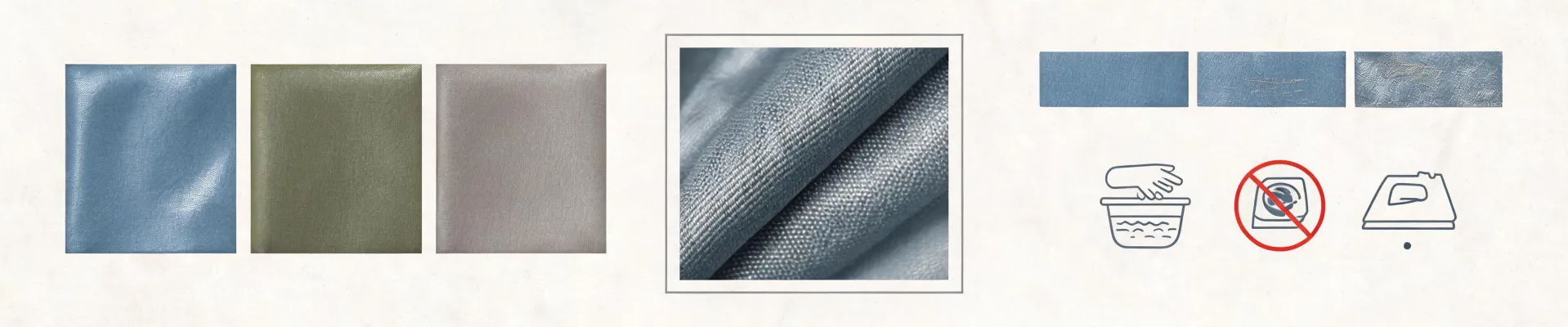
Here's what I do: request three swatches from three different production dates. Check them side by side under D65 and in daylight. Look at the backing, grain direction, and roll edge. Then ask for the roll map—where the sample sits in the lot. People assume the sample represents the lot. What they don't see is the sorting that happened before it was mailed.
Trust me on this one: if the distributor won't send production swatches, keep looking.
3. What is Spradling Breeze, and where does it fit?
Spradling Breeze is one of the Spradling marine vinyl options I've specified for interior seating where hand-feel and cleanability both matter. It is not a magic fabric. I still check the current technical data sheet for UV, mildew, and abrasion results against the application.
For exposed exterior seating, I usually start with Spradling marine vinyl grades that have the right UV and cold-crack data for the climate. For interior or covered areas, Spradling Breeze can make sense when the design calls for a softer touch. The key is matching the grade to the actual use, not the catalog photo.
And always verify the current spec sheet at spradling.com. Formulations and certifications can change; don't quote me on a number you saw in an old PDF.
4. How should I evaluate PU leather manufacturers?
When people ask how to evaluate PU leather manufacturers, I tell them to stop treating it as a material-only decision. PU leather performance is heavily process-dependent. You need peel strength, hydrolysis resistance, color fastness, and backing stability. Ask for REACH and RoHS documentation if you ship to the EU.
I run a three-lot test: first, middle, and last roll from a production run. Same test methods, same lab. If the middle lot fails, the supplier has a process control problem, not a sample problem.
The numbers said go with a cheaper PU supplier once—15% less, similar specs on paper. My gut said no. I went with my gut. Later, a colleague in another division found that supplier had hydrolysis failures in humid storage. The spreadsheet didn't show that.
5. What specs should be in an OEM or private label vinyl contract?
Be painfully specific. Define base fabric, coating weight, emboss pattern, color target, finish, tolerance ranges, roll length, core size, packaging, and labeling. Add a change-control clause: no formula, backing, or emboss changes without written approval and new samples.
I should add that test methods matter as much as limits. 'Abrasion: 50,000 cycles' means nothing if the method is different from yours. Reference the standard—ASTM, ISO, or your own lab protocol.
Put this in a template. A good template cuts qualification time from weeks to days because you're not renegotiating the basics every time. That's the efficiency win most buyers miss.
6. Why do the cheapest quotes end up costing more?
People think cheap quotes cause margin problems because the material is bad. Actually, unpredictable quality causes the real cost: sorting, rework, expedited freight, and line downtime. The quote wasn't cheap once those hit.
In 2023, we had a batch of 8,000 units ruined in storage because the backing wasn't stable in humidity. The redo cost us around $22,000 and delayed a launch by three weeks. The original savings were maybe $3,000. Do the math.
So when a quote is way below the others, ask what's being deferred. Is it testing? Lot traceability? Packaging? Something is paying for that discount.
7. What compliance documents should I request before ordering?
For marine applications, ask for IMO FTP Code Part 8 flame test documentation where required. Per the International Maritime Organization (imo.org), upholstered furniture components on ships must meet flammability requirements. Verify current certificates and exact product listings—don't accept a generic 'marine approved' claim.
For indoor air quality, UL GREENGUARD Gold is common. According to UL Solutions (ul.com), it tests for low chemical emissions. For California, check Proposition 65 warning requirements at p65warnings.ca.gov. For the EU, check the current REACH SVHC candidate list at echa.europa.eu.
Compliance documents are not a one-time PDF. Set up a calendar reminder to re-verify them. Certifications expire, standards get updated, and your customer's compliance team will ask.
8. How can I speed up supplier qualification without losing quality?
Standardize the request. Use one digital spec sheet, one test request form, and one sample tracking log. I implemented this in 2022. It cut our qualification cycle from about 15 days to 6 for standard grades. The automated log eliminated the data entry errors we used to have.
But don't automate away judgment. Highly custom embosses, unusual backings, or new sustainability claims still need human review. The goal isn't to replace the quality manager; it's to stop wasting time on routine checks so you can focus on the weird stuff.
Bottom line: efficient suppliers are easier to trust because you can see their process. If the paperwork is chaotic before the order, the rolls probably will be too.
Editorial boundary
This article is an independent interpretation aid. Verify the exact collection, color, regional document, method and current commercial status with Spradling or an identified official channel. No affiliation, authorization, inventory or project approval is implied.

Sahana Iyer
Sahana Iyer is an interior-textile analyst covering upholstery, curtain, blackout, chenille, velvet, jacquard, bedding, hospitality linen, awning, and outdoor-furniture fabrics. She applies ISO 12947 Martindale methods and ISO 105-B02 lightfastness testing while comparing abrasion cycles, pilling, colour change, seam slippage, pile direction, dimensional stability, usable width, stain response, and dye-lot variation. Her material guides help interior designers, contract specifiers, furniture makers, and hospitality buyers connect test conditions with traffic level, window exposure, cleaning regime, appearance retention, and replacement planning.