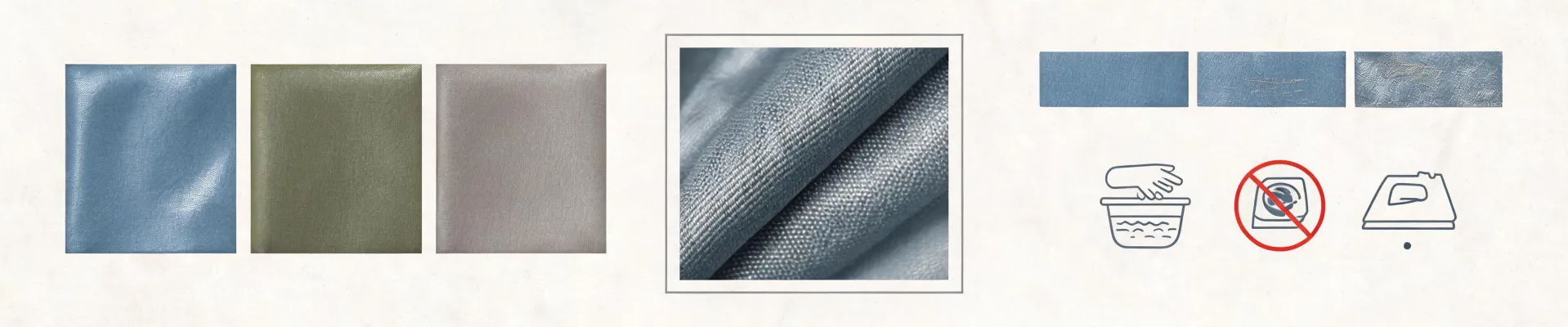
-
1. Confirm the spec, not the product name
-
2. Put thickness and weight tolerances in the contract
-
3. Approve signed color against a physical standard — and get a Delta E reading
-
4. Verify performance claims with the actual number
-
5. Match compliance documents to the end-use, not the product category
-
6. Request batch-consistency samples — this is the one most buyers skip
-
7. Nail down roll dimensions in the PO
-
8. Run a blind comparison on your first article
-
9. Check packing and shipping conditions on arrival — and put it in the checklist
-
Common mistakes I still see buyers make
If you're sourcing marine vinyl, upholstery fabric, or automotive synthetic leather — whether as an OEM, a private-label brand, or a distributor stocking for your own customers — this is the checklist I run before I approve any batch. Nine points. Each one exists because I got it wrong at least once, or watched a supplier's batch fail without it.
I'm a quality and brand compliance manager at a mid-sized upholstery manufacturer. I review every vinyl and synthetic leather order before it reaches production — roughly 200 unique SKU runs a year. I've walked back about 12% of first deliveries in 2024. Here's what I check, in order.
1. Confirm the spec, not the product name
"Spradling Breeze" or "marine-grade vinyl" isn't a specification. It's a catalog line. When I first started reviewing these orders, I assumed a trusted product name was enough. Two rejected batches later, I learned better.
Your PO needs to state, in writing:
- Face composition (e.g., 100% PVC, PU-faced, etc.)
- Backing type (knit, woven, non-woven)
- Weight per square yard or GSM, with a stated tolerance (±5% or ±10%)
- Thickness in mils or millimeters, with a range
- Topcoat / finish (matte, glossy, grain pattern reference)
If your supplier can't give you those five lines in writing, that's already a data point.
2. Put thickness and weight tolerances in the contract
Saying "about 1.2mm" guarantees nothing. In 2023 we got a batch of what was supposed to be 1.2mm vinyl. Measured at five points per roll, we got 1.05 to 1.35. For a single sofa, that's fine. Across a visible seam line on the same piece, it's a defect.
The fix: state your tolerance band in the PO, and require a signed inspection report from the mill with actual readings — not a checkmark.
3. Approve signed color against a physical standard — and get a Delta E reading
Color is where most disputes start. The industry standard for brand-critical colors is Delta E < 2. Between 2 and 4, a trained observer notices. Above 4, most people do. Reference: Pantone color tolerance guidance used across the textile and coated-fabric industries.
Two things matter here:
- Ask for the Delta E reading, not a visual "looks good."
- Check it under both daylight (D65) and your retail or showroom lighting. Vinyl shifts color under different sources more than people expect.
If the supplier can't produce a Delta E number, request a physical standard — a signed retro sample they hold in their library — and approve against that.
4. Verify performance claims with the actual number
"Durable" isn't a spec. "Abrasion-resistant" isn't a spec. Cycle counts are.
For coated fabrics, the reference test is typically ASTM D4157 (Wyzenbeek abrasion). Ask for the test report — and read the number, not the pass/fail stamp. "50,000 double rubs" and "passes" are not the same claim.
For marine applications, add hydrolysis resistance to the list. A vinyl that looks perfect in a warehouse can fail in one season on a dock. If your end use is marine, this is non-negotiable.
5. Match compliance documents to the end-use, not the product category
This is the step most buyers get half-right. A generic "compliance certificate" rarely covers the actual application. Different end-markets have different thresholds:
- Commercial/hospitality upholstery: look for CAL TB 117-2013 or your regional equivalent.
- Marine interiors: IMO FTP code references, plus documentation on anti-microbial and mildew treatments.
- Automotive trim: OEM-specific specs, plus the VOC and fogging tests your tier-1 customer requires.
If a supplier says "our product meets all standards," ask which ones, for which markets, and get the document. Blanket claims don't survive audits.
6. Request batch-consistency samples — this is the one most buyers skip
You don't just want an approval sample. You want three rolls from three different production runs — ideally two weeks apart — laid side by side.
If those three don't match each other, you've just found your next shipment problem before it ships. I've caught two supplier drift issues this way in the last 18 months, both before the PO shipped. That quality issue on a previous order cost us a $22,000 redo and pushed our launch window by nine days.
7. Nail down roll dimensions in the PO
This sounds boring until your cutting table has to run 30% extra material to hit yield.
- Length: linear meters or linear yards? State it. Suppliers vary.
- Width: nominal and minimum. A "54-inch" roll at 52.5 usable is a different product.
- Core diameter: 1.5-inch or 3-inch. This affects your spreader setup and your waste.
8. Run a blind comparison on your first article
When a supplier sends you two options — their standard and an upgrade — strip the labels and hand them to your pattern maker or QC lead. Ask: "Which one feels like the brand?"
I ran this with our 14-person team on one project. Nine of the fourteen picked the same sample. It was the upgrade. The cost delta was $0.35 per unit — about $1,750 across a 5,000-unit run, for a measurably better perception score. That's the kind of trade I'd take every time.
9. Check packing and shipping conditions on arrival — and put it in the checklist
This one rarely makes it into purchasing documents, and it should. Two problems I've seen repeatedly:
- Rolls shipped horizontally, creating flat spots that don't relax out.
- No moisture barrier, causing edge damage on long ocean freight.
Specify vertical loading where possible, moisture protection, and a maximum container dwell time. It's a five-line addition to the PO. It's saved us more than one rejected roll.
Common mistakes I still see buyers make
Treating "marine-grade" as a spec. It's marketing, not a standard. Write the actual numbers.
Skipping the Delta E step because "it looks fine." Your eyes adapt. Calibrated instruments don't.
Never verifying on receiving. Five minutes of measurement on intake beats five days of rework on the line.
Assuming one supplier's cert covers another market. It doesn't. Ask for the exact document, for the exact application.
My experience here is based on roughly 200 mid-volume runs — mostly 12 to 5,000 linear-yard lots, across marine, hospitality, and light automotive work. If you're sourcing luxury-grade or ultra-budget imports, the tolerances you can accept will shift. But the checkpoints don't. What I mean is: the list stays the same, the numbers move.
And one more thing — order a physical sample before you commit to a full run. Photos lie. Screens lie. Physical samples are the cheapest mistake insurance in this business.
Editorial boundary
This article is an independent interpretation aid. Verify the exact collection, color, regional document, method and current commercial status with Spradling or an identified official channel. No affiliation, authorization, inventory or project approval is implied.

Mireille Fontaine
Mireille Fontaine is a textile quality, compliance, and sourcing analyst covering apparel fabrics, interior textiles, performance materials, coated fabrics, nonwovens, fibres, recycled-content claims, chemical restrictions, and mill production terms. She uses ISO 14040 and ISO 14044 life-cycle boundaries alongside lot-based inspection data while comparing declared composition, restricted-substance evidence, chain of custody, colour difference, defect rate, MOQ, sampling lead time, yield loss, and replacement risk. Her procurement guides help brands, importers, and manufacturers compare supplier claims, test-report scope, bulk tolerances, traceability, environmental disclosures, and total delivered value.